Keep the faith
Faith communities are an essential ally in the fight against inequality and conservatism, writes Anna Dixon MP
The rich man in his castle/the poor man at his gate/God made them high and lowly/and ordered their estate. “This verse of the 19th-century hymn, All Things Bright and Beautiful, is thankfully omitted from modern songbooks. At the time it was written, the church defended hierarchy and sought to preserve the existing social order rather than challenging injustice and inequalities. Such views are no longer acceptable to today’s churchgoers. It would be a mistake, however, to think of progressive Christianity as a modern phenomenon. There has long been a tradition of radical Christian thought in Britain, which in turn has influenced the wider labour movement. Perhaps most notably, the first leader of the Labour party, Keir Hardie, was a Christian socialist.
I am one of over 50 parliamentarians who are members of Christians on the Left. As of this year, I am also proud to be the group’s chair. With 2,000 members across the UK, it is one of the larger affiliated socialist societies, with a history dating back to the founding of the Christian Socialist Movement in 1960. Of course, the links between Christianity and socialism go back much further. Consider John Ball, the 14th-century priest and rebel, who was most famous for his part in the Peasant’s Revolt of 1381, during which he preached social equality and questioned the position of the ruling classes and landowners. Historians often date the birth of modern Christian socialism to 1848, when FD Maurice and other Chartists led the movement. More formal organisations followed, including the Christian Social Union, which was founded by Scott Holland and Charles Gore in 1889. Secularism and statism may have dominated the Labour party at times in the past, but today’s party – and the government – increasingly recognise the need to respect faith and belief, to partner with faith communities, and to embrace faith as a progressive force in politics. This is in line with our founding values as a party, but also reflective of modern Britain, where, according to the 2021 census, six in 10 people identify as having a religious identity.
Church and politics
Growing up during the Thatcher years, I witnessed the shifting contours of Britain: jobs being destroyed across swathes of the northern industrial heartlands, the miners’ strike and heavy-handed policing, and a new era of individualism as the market was let rip. This excessive materialism was personified by Harry Enfield’s‘Loadsamoney’ character, who was the antithesis of the Christian values I was taught. In my Methodist church in Yorkshire, being a Christian was not just about helping the poor; it was more radical, focused on changing the structures that caused poverty and inequality. My socialist and Christian values of solidarity with the poor and marginalised, equality, and social justice remain inextricably linked to this day.
During this time, it was common to hear people trot out clichés such as “the Church of England is the Tory party at prayer.” In actual fact, the Archbishop of Canterbury, Robert Runcie, set up a commission to look into the issue of urban poverty. The Faith in the City report published in 1985 – forty years ago this year – blamed the poverty in the inner cities on a range of government policies and was politically explosive, causing a backlash from Conservatives. It led to the establishment of the Church Urban Fund, and gave voice to those who the churches were encountering, challenging the view that individuals were to blame for their situation.
Faith into action
Today we see the contribution of faith communities on every high street and across the country. Many a refilling gaps in state support resulting from over a decade of Conservative austerity. Walk into almost any church in the country, and you will find a timetable of activities including toddler groups, lunch clubs, youth clubs, memory cafes, warm spaces, night shelters and foodbanks. For some in today’s church, it is through volunteering in social action projects that they first directly encounter people living in poverty. Any lingering belief that poverty is caused by idleness – perhaps a legacy of early Victorian Christian rhetoric – is soon dispelled by listening to the stories of people they meet. You don’t have to spend long talking to vulnerable people – someone in the local food bank, working two jobs yet still unable to make ends meet; someone at the homeless shelter, sofa surfing because they split up from their wife; someone made redundant, with nowhere to go because they couldn’t keep up their rental payments – to start to ask a different set of questions. Why doesn’t work pay better? Why does someone have to accept a zero-hours contract? Why don’t renters have more security?
These are the working people for whom a Labour government has ended fire and rehire, abolished exploitative zero-hour contracts, increased the minimum wage, and ended no fault eviction. Labour is also tackling homelessness and investing in social and affordable homes. As people of faith increasingly encounter the consequences of over a decade of Tory neglect of public services, the Labour movement can engage them, and in doing so, gain strong advocates for the difference a government focused on social justice can make.
Faith communities as partners
Delivering on the government’s missions will require the contribution of faith communities. Whether developing policies such as the youth strategy, child poverty strategy or tackling issues like homelessness and refugee support, it is vital that government departments engage with faith communities, who are often engaged with and close to people whose voices are seldom heard.
The Faith Covenant, developed and promoted by the APPG on faith and society, has proven to be a positive way for local authorities and faith communities to develop trust and work in partnership. There are also several national initiatives helping bring together and equip local faith communities to deliver more social value. The Churchworks Commission, which grew out of the response of churches during Covid, now works with 1500 churches across 16 denominations to equip them with resources to address urgent social issues in communities across the country. The Gather Movement works with over 8,000 churches and charities across150 towns and cities to generate community-based regeneration. It has mapped the contribution of social action in Coventry and found that church-based parent and toddler groups reach 50 per cent of early-years children in the city. Similar work is now being replicated across Greater Manchester.
Recognising what is already going on is a first step, but Labour must establish stronger partnerships with faith communities to develop inclusive strategies and deliver lasting change.
Social liberalism vs conservatism within the church
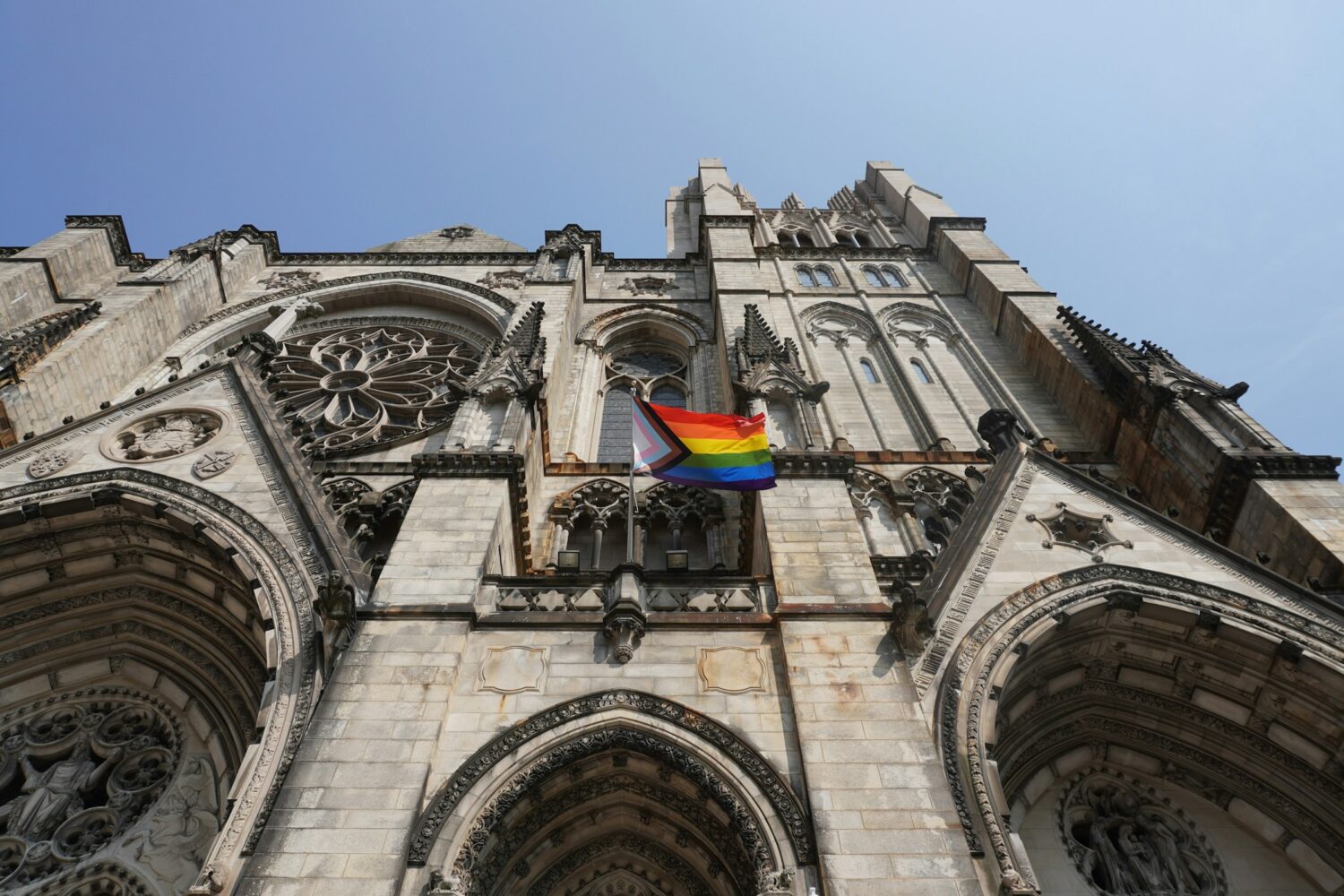
While the church has seen continuous progressive social action, there has perhaps been a tendency for socially conservative views to persist in some churches. Some political commentators are predicting a resurgence in socially conservative views, citing Blue Labour and the Conservative ‘anti-woke’ rhetoric as well the influence of the US, where Trump’s alliance with American evangelical Christians was in part credited for his re-election. In the US, however, over half of Republicans think Christianity is important to being truly American; just one in four Conservative voters think the same, only slightly higher than the proportion of Labour voters. There are currently few signs that the UK right has a major religious appeal, although we have some of the same policies which have the support of the religious right in the US become salient here, such as attacks on women’s reproductive rights, trans and gay rights and sex education teaching in schools.
The popularity of the late Pope Francis among British Catholics, who welcomed his focus on poverty reduction , LGBTQ+ inclusion and the climate crisis, suggests that social liberalism is alive and well in the UK. The role of churches in welcoming refugees and speaking up against divisive rhetoric on immigration is another contrast with religious stances in America. And the Archbishop of York’s recent intervention against Nigel Farage’s proposal for mass deportations suggests the Church of England, at least, is prepared to call out politicians on the right.
What is the place of faith in the modern Labour party?
The Labour party actively engaged with faith communities during the election through Faith in Labour, a theme that has continued in office, with the prime minister recently appointing a faith adviser based in No 10. Additionally, a group of MPs have been appointed as faith and belief champions across a diverse range of denominations and religious traditions. These are positive steps and reflect the fact that we do not live in a purely secular society. The government must recognise the role that faith and belief play in how people live, work and play, as well as in their politics. The old secular liberalism that aimed to keep faith out of politics is long dead. On the other hand, those who want to keep politics out of the church will find it hard to do so when they open their doors to provide food and support; they cannot ignore the structural causes of the poverty, loneliness, and mental health problems they encounter. By embracing modern progressive Christian socialism, Labour can take a steal on the right and ensure that the Trumpian flavour of Christian social conservatism does not take root here.
Image Credit: Bertrand Colombo via Unsplash