Tipping point?
On the penultimate weekend of the Hamilton, Larkhall & Stonehouse byelection campaign, Chris Carter caught up with Sarwar at his campaign office
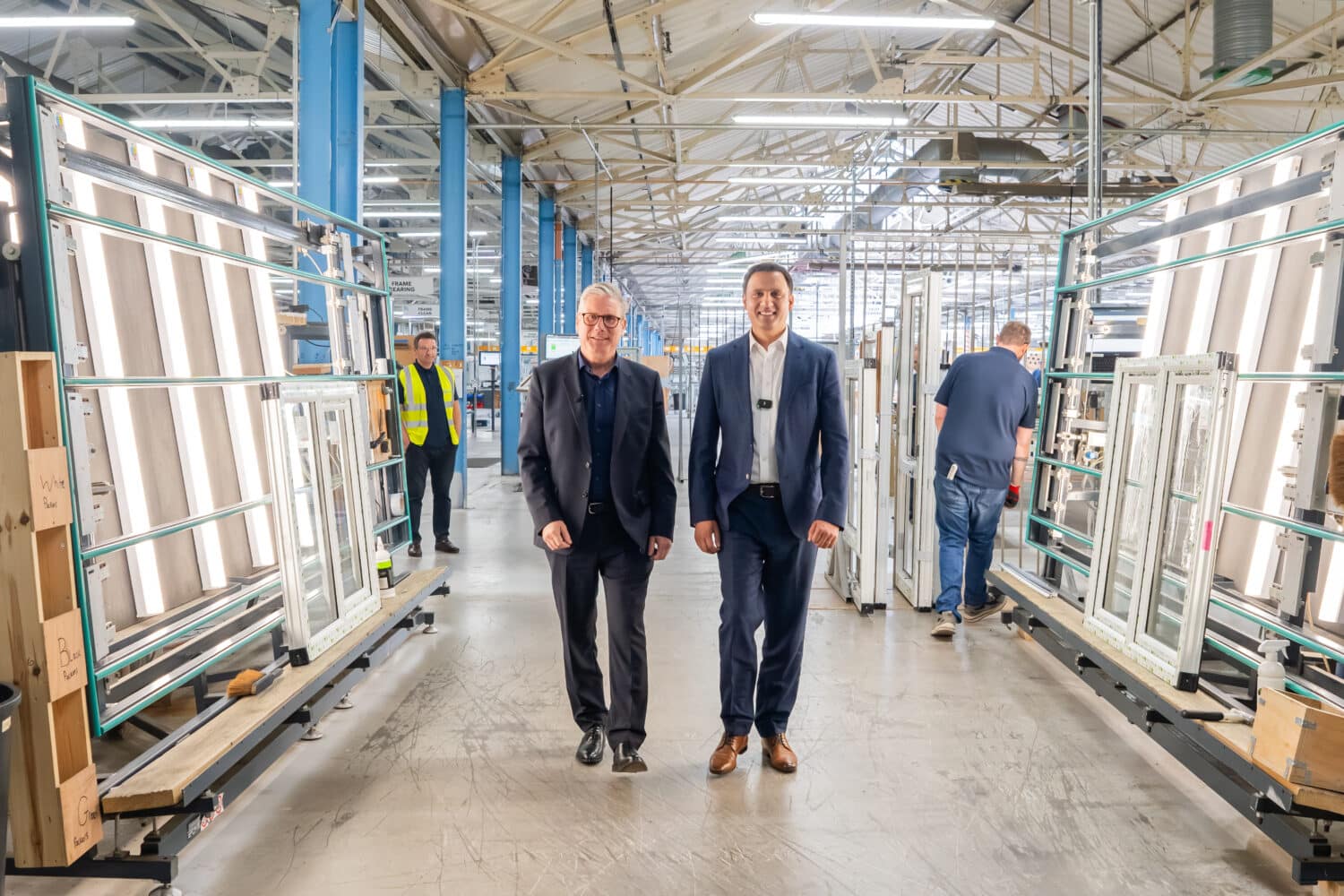
The makeshift office is buzzing with activity as teams of campaigners prepare to canvas for Davy Russell, the candidate. It is unusually balmy – so much so that one staffer welcomes me to ‘Costa Del Hamilton’. As nice as the weather is, though, it is probably not quite as sunny as the Scottish Labour leader, Anas Sarwar. He greets each volunteer enthusiastically as they arrive.
Sarwar has now been the leader of the Scottish Labour party for over four years. His career falls into three distinct periods: the gilded ascent – during which, after working as an NHS dentist, he was elected to Westminster at the age of 27 and became deputy leader of Scottish Labour a year later; the sharp reverse – losing his Westminster seat during the political earthquake of 2015, and a failed leadership bid in 2017; and the recovery – when he bounced back and became leader in 2021.
We know a lot about Anas Sarwar the person –the dentist, the dancer, the cheeky chappy – but who is Anas Sarwar the politician? What really gets you up in the morning?
It’s interesting that you talk about being a ‘cheeky Chappy ‘and being positive and happy. Less so now, but it’s funny, often, over the course of the last 15 years, people [have said]: “Oh, the guy’s too cheerful, too happy – where’s the substance?”—I think that the currency of just being a nice person is underplayed in politics, and that actually, having politicians that just like talking to people is really important. I know far too many politicians who just don’t like talking to people, and they’re probably in the wrong game. What gets me up in the morning is this: I look at what’s happening in Scotland, and it frightens me, to be honest with you.
I think we are at a tipping point regarding whether we can build a fairer, better Scotland, or whether we’re going to continue to go backwards, and that gives me great fear for my young children.
So I wake up every single day determined to build a better Scotland for them and for children right across the country. And that’s more than just sloganizing. It’s more than just moaning or criticizing or looking elsewhere. It’s about looking at what Scotland’s potential is, what power it’s got, what it can do. And we’ve just got politicians right now that run this country that have no interest in using the power and responsibility they have to build a better Scotland for my kids and everybody else’s kids. That’s what I want to change.
And what would the vision of a better Scotland be? What would you like to be better?
The one word I hear most often when I’m out and about chatting to people is they feel scunnered. That might not be a word that people outside of Scotland understand, but it just means that they feel pretty down about it all. And I think we have got to get Scotland’s institutions, public services and economy working again – it’s as simple as that.
You packed an awful lot into the 15 years that you’ve been in elected politics. What have you learned as a leader over the over that time? What have you learned about yourself and what have you learnt about politics?
Well, loads, I could talk to you all day about it.
When you come into politics as a 27-year-old… I was a wain, honestly. I was coming in at a time when Labour had been in power all my adult life, and you get caught up, I think, in the political bubble and your own political circle, and thinking everything your own party says is right and everything every other political party says is wrong, and being quite tribal.
And I’ve often said this before, the two most difficult professional experiences in my life were losing the election in 2015 and losing the leadership election in 2017 but they were probably the two best things to ever happen to me – politically, and, in many ways, personally. Because when you are stripped of ambition, when you are stripped of expectation, it is so liberating. I’m a better politician for it, I’m a better parent for it. I’m not sure my mum and dad would say I’m a better son for it. They may have their own view! But I genuinely feel like I’m a better person and a better politician, because you learn.
No one can pretend my 15 years in politics has been easy. It has been an absolute rollercoaster. We talked about the success last year. That’s probably the only real success, if you think about Labour winning, in the entire 15 years. But that’s only made me more determined. It’s not made me want to walk away. Don’t get me wrong, there have been moments when I have thought about it, but it’s only made me more determined to do what we’ve got to do, to get our party in a place where it can win, it can compete, and to get us in a place where we can do positive, good things for Scotland.
I’m really proud of the role we played to elect a UK Labour government. That’s the job half done. The next part is electing a Scottish Labour government, then using the vast talent, resources and power that Scotland has to build a better Scotland, to get Scotland working again.
Scottish politics – it’s a cliche to say, but it’s febrile, its fast-shifting. You’re knocking on a huge number of doors. What’s your sense of where Scottish politics is now?
I think politics has changed so much, and it’s so fast moving, that if the average commentator, or even the average pollster, looks back at what they were predicting and projecting three years ago, two years ago, one year ago, they’ve all been proven wrong. If I believed every commentator that said Scottish Labour was dead, or that Scottish Labour had no chance of winning, or that Scottish Labour would be lucky to get eight seats or15 seats in the general election, I would have packed up and gone home a long time ago.
And actually, the commentators and pollsters have been so wrong, and I’m surprised they’re not looking at their record when they’re making big, grand projections now about what might happen in the future. But I suppose their job is to report on the snapshot of the day, rather than looking to the future. My job is to look to the future, and that should be the job of every politician, to look to the future and what they can do differently.
You’ve talked about that before in relation to Gordon Brown – that what makes him great politician is his ability to see where things are going, and then to be there.
But also, I think what makes him a great politician is not just that he looks to the future, but that he keeps an iron rod, or iron spine, of values throughout it all. He’s real conviction politician.
Generations change and have different styles, but I’m driven by the same conviction around making things work in Scotland.
And in this constituency, where are politics now?
I think the interesting thing right now is, people are frustrated. I don’t think that they think government works. I don’t think they think the economy works, or public services. I think they feel as if they’re being asked to pay more and more to get less and less in return. They feel as if there is a managed decline happening in our country.
I think layered on top of that, probably partly fed by social media algorithms, there’s a sense of unease, a sense of underlying change that feels quite alien to them. And i think that sense of insecurity, that feeling that things don’t work, is being played upon by politicians who want to use division and fear to achieve personal power and personal vindication rather than improve our country. I think the people have decided largely that they think the SNP is doing a bad job and that it’s not working. I’m not saying that’s true for everybody; I’m sure there’s still a core of people, including those that are resolute supporters of independence.
But I think even they, when you speak to them, don’t feel as if the government is working for them. So, I think there is now a clear sense in the country that it’s notworking, and that something needs to change. And i think the big risk we have with the divisive politics of the likes of Reform is that we end up risking a third decade of the SNP.
You’ve talked about being authentic. What is it about being authentic that can counteract what we’re seeing with Reform?
The reality is Nigel Farage is not going to go to the doorstep. He’s the kind of politician that wants to showboat and play the game to get the headlines, backed, in many ways, by a media narrative that seems obsessed with him as a personality. But Scotland will see right through him.
I don’t care about Nigel Farage, and Nigel Farage doesn’t care about Scotland, and we should just be really open about that. Nigel Farage can’t be first minister, Kemi Badenoch can’t be first minister, and for all they want to criticize our UK Labour government, Keir Starmer is not standing for first minister – he’s our prime minister.
He’s doing a really important job: turning around 14 years of damage done by the Tories. But the choice for first minister, it’s either going to John Swinney or it’s going to be me, and I want to demonstrate – with full respect to John Swinney; I’m not pretending everything he’s done in the 18 years that he’s been in the heart of government has been bad – that we need a different kind of leadership here in Scotland, a new energy, a new generation, with some new solutions.
It would have been difficult, 20 years ago, to imagine a Scottish parliament byelection withs much buy-in from the Westminster contingent. We’ve all seen the hostility towards the Labour government in Westminster from the media, which seems to be cutting through with people. Could you just tell us a little bit about the dynamics of that relationship between Scottish Labour, Westminster Labour, and the 37 MPs that we send to the Commons?
Look, our 37 Labour MPs recognise that their role is to fight for their communities and fight for Scotland. They aren’t there as some kind of protest wing for Scotland, like the SNP MPs, who are sitting in the opposition benches, shouting abuse, shouting slogans and ultimately coming back with nothing. Their job is to get around the table, be in the corridors of power, and influence decisions for the people of Scotland. I think they’ve done that really, really effectively.
When you look at the ministers from Scotland, they ‘re doing a disproportionately brilliant job. You’ve got Douglas Alexander, who’s leading for us on trade. We’ve had three really significant trade deals in the last three weeks: a new trade deal with the US, which people said wasn’t possible, and that the SNP opposed; a new trade deal with India that people said wasn’t possible, and that the SNP opposed; and a new trade deal with the EU, which everybody said wasn’t possible, and that the SNP opposed. You’ve got Michael Shanks as our GB Energy minister, and you can see the game-changing impact that’s having when you look at the huge challenge of racing towards net zero while protecting the oil and gas sector as much as we can as it transitions away from fossil fuels to a renewable future.
Earlier you mentioned Keir specifically. He is someone that genuinely cares about and understands Scotland, and he is someone that I have not only a political relationship with, but a personal relationship with. He has got a really, really difficult job. He’s got loads of things to balance.
But I can honestly say that he knows that I was an integral part of making him prime minister, and he knows that he has to be an integral part of making me first minister. I’m really proud of the role I played in making him prime minister, because I genuinely believe he’s a decent man who has good values and who wants to deliver a better future for our whole country, including Scotland. I think it’s easy to forget how terrible the inheritance was from Boris Johnson, Suella Braverman, Jacob Rees-Mogg, and all the other people who were the key figures in our politics. That’s the mess that a UK Labor government is trying to clear up. But I think you can see that progress now being made: energy bills are finally coming down – we need them to come down further, but it’s finally happening. Mortgages that went up £2,000 under Liz Truss are now coming down significantly because of the economic stability provided by UK Labour government. We’ve got the fastest growing economy in the G7, which analysts didn’t predict. We’ve got a record increase in the living wage. We’ve got the new deal for working people, and we’ve got these new trading relationships with the EU, with India, with the US, as well as potentially a dealt hat’s currently been negotiating with the Gulf states. All of these are huge, with massive potential for us herein Scotland and right across the UK.
So, you’re starting to see the difference a Labour government is making. And I think looking forward to another year of that, it gives me great confidence that we can win in 2026 – but ultimately, that’s up to the people of Scotland
Image credit: Keir Starmer via flickr