Building communities
Community engagement provides a more holistic approach to housing development, argues Adrian Harvey
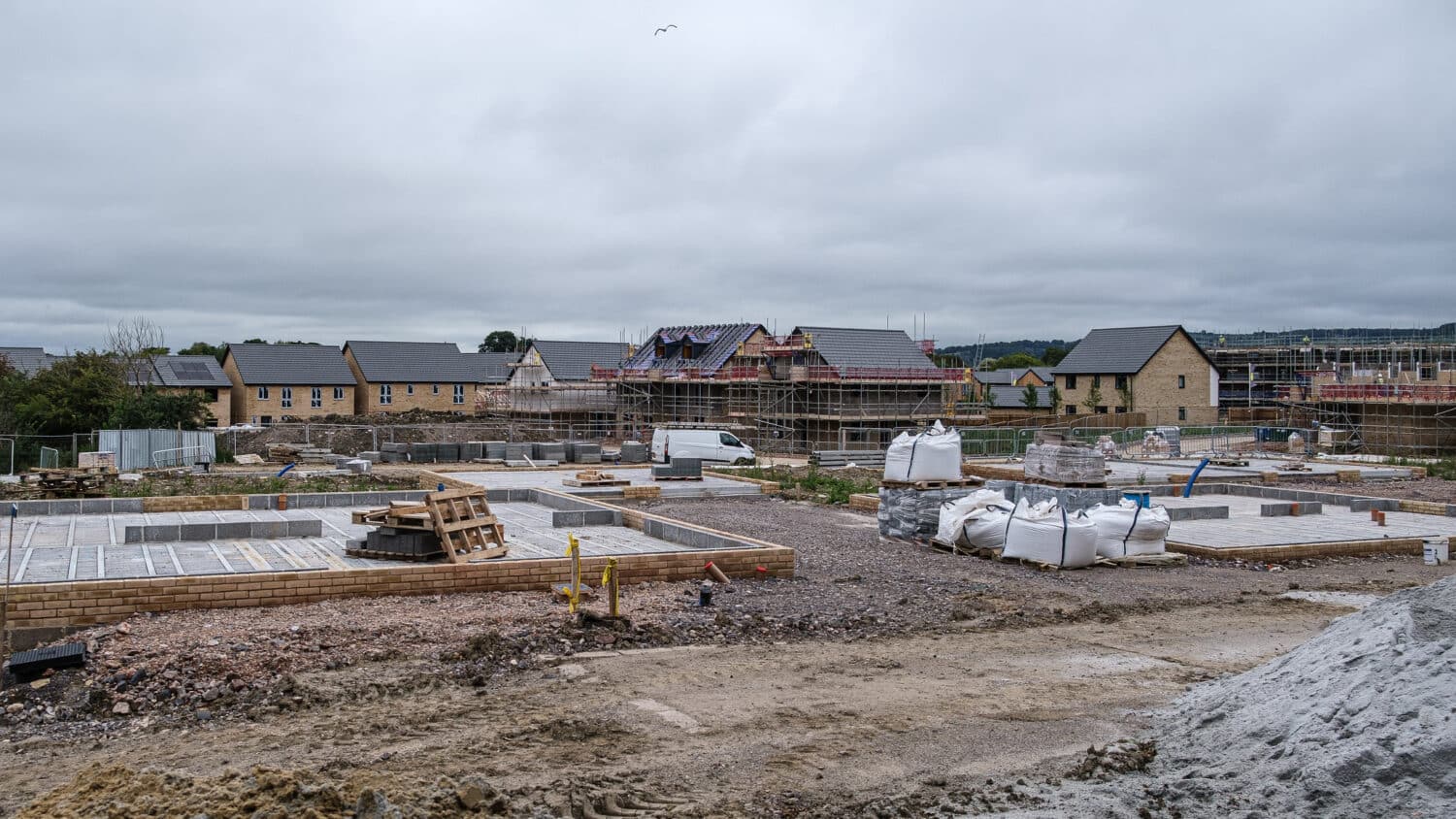
The government’s laudable ambition of building 1.5m homes is… well, laudable and ambitious. This level of housebuilding has not been achieved in generations, and it would open up a host of social and economic benefits. But it’s not just a numbers game. Even if the numerical target can be achieved, it will be as important to build places that people will want to live in into the future. And, happily, the evidence suggests that building better places is key to making development more welcome. The Fabian’s recently established Housing Centre will undoubtedly provide insight and expertise at a national level on how to achieve this. But development, and especially place-making, is local. New mechanisms are needed to support local authorities in making sure that each one of those 1.5m homes is in a neighbourhood that have been designed for the long haul.
There are already some tools around to help local planners secure better buildings and spaces. ‘Design review’, for example, has been a part of the development process for quite some time: the Royal Fine Arts Commission was appointed in 1924 to review proposals to promote excellence in architecture. However, it is much more commonplace – and collaborative – today, with a host of local and regional design review panels offering advice on development across much of England, drawing on the professional experience of some of the country’s leading designers. While this advice is invaluable for stretched planning authorities, it has until recently excluded another kind of expertise: the knowledge that comes with living in a place over time.
However, a new model of public engagement is emerging that builds on the experience of design review to put the views of local people into the mix. The first community review panel was established in 2018, on behalf of the Old Oak and Park Royal Development Corporation. Since then, it has become a proven concept: a further six have been set up, and several London authorities are actively considering establishing their own panels.
In almost every regard, ‘community review’ works in precisely the same way as professional design review. Panel members are appointed to broadly reflect the demography of the place within which the panel operates. Their role is to represent themselves, as local residents, by giving their views on how development can benefit the local area; the expertise they offer is based on their understanding of what works, and what does not, about their place. Crucially, community review enables local people to be involved the confidential pre-application stage, before key decisions have become fixed and engagement becomes adversarial. The nature of the discussion at a community review meeting is very different to the standard models of developer engagement and local consultation, which often inevitably frame community engagement as an obstacle to be overcome, rather than a source of inspiration and learning.
It is true that, like other mechanisms for community engagement, community panels present concerns about nuts-and-bolts issues like car parking, but they are often notably more nuanced. Because panels have a wider scope, they can make the point that for car-free developments to work requires more than simply removing car parking spaces: active travel and active management need to be part of the mix.
Community panels bring a holistic understanding of a locale, including how it has developed over time. This longitudinal view adds an unparalleled richness to the analysis of even the best design teams. Community panels have skin in the game in a way that local planners and developers do not.
Community review has the potential to encourage better development everywhere, but the challenge is to expand its availability. Existing national policy makes clear that applications that can ‘demonstrate early, proactive and effective engagement with the community should be looked on more favourably than those that cannot.’ But policy offers no clues to planners on how they can make this happen. While design review and other professional tools are cited in policy, the nature of engagement is left nebulous.
Policy is not a silver bullet, of course, but the importance of policy cannot be ignored. Even after a century of professional design review, a recent survey of local planning authorities found that clearer guidance from the government on the role of review within the planning system would be the one thing most likely to encourage planners to either start or increase the use of design review. Without something similar for community review, progress will be slow. Promotion, cajoling and demonstration will yield some results, but only in time. If we are serious about creating places, not just delivering units, design and quality need to be part of the new spatial development strategies that will flow from the planning and infrastructure bill. And a specific reference to community review in the NPPF would help to ensure that community perspectives can help to positively shape new communities across the country.
Image credit: Velodenz via Flickr