Part of the main
The atomised individual is at the heart of modern liberalism, argues David Smith MP
In 1995, as a politics and modern history undergraduate at the University of Glasgow, I was first introduced to Francis Fukuyama’s seminal book The End of History and the Last Man. Its argument – briefly, that the west’s victory over communism presaged the universal and permanent ascendency of both liberal democracy and capitalism – is one of the most influential sociopolitical commentaries of the last 30 years.
It is also profoundly wrong, at least in its core argument: the rise of authoritarian China and militant Islamism since the turn of the century are enough to show us that ideological divergence remains alive and well. But Fukuyama was right in one sense: the end of the cold war did end any meaningful ideological contest in the west, including in the UK, and a form of liberalism has remained ascendant ever since.
I say a form of liberalism because the kind which has predominated in much of British public discourse since the 1990s – in politics, the media and the arts – has diverged from classical liberalism, the promise of which was central to undermining the Iron Curtain’s foundations. The classical strain values the free and respectful exchange of ideas within a community and a democratic political system that protects people from majoritarian overreach (while not promising to respect or protect the content of their ideas). In the west, this classical liberalism has increasingly made way for a kind of ‘illiberal liberalism’. This new doctrine values conformity over freethinking, self-actualisation over solidarity, rights over responsibilities, and anywhere over somewhere. Instead of promising a social environment which enables a respectful exchange of ideas, it is an ideological system with an evangelical zeal to convert all to its truth.
Core to this ideology is the atomised individual, untethered from place, community or identity in a globalised world, and unhindered by social responsibility. This is an ideology under which some have prospered, but many others have been left behind. It is also the consensus in every major political party. When the focus is on economic issues, it is often called neoliberalism. When the focus is on what might be termed social issues, the common name is progressive liberalism.
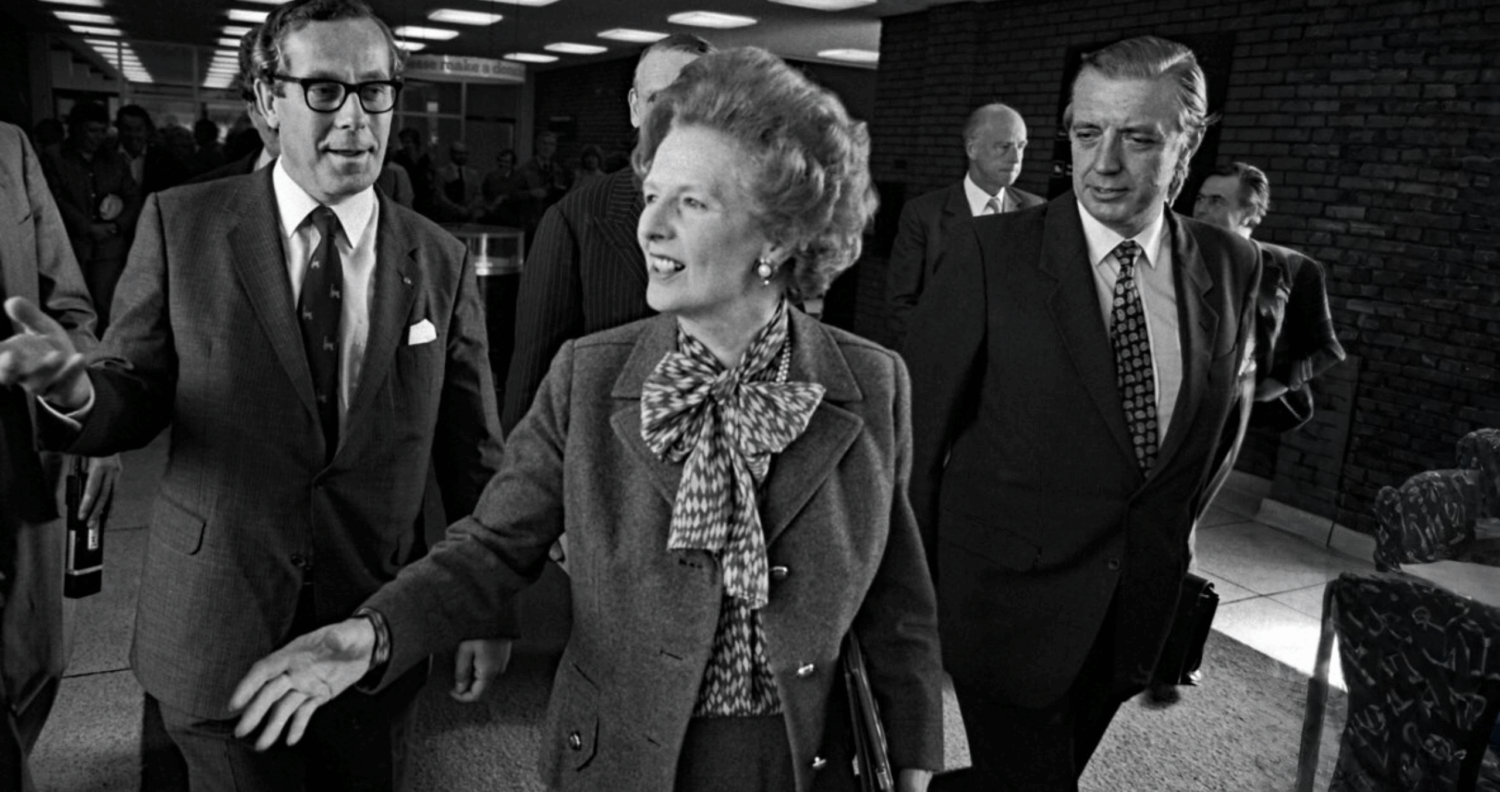
These twin liberalisms are normally viewed as the two great rivals of modern politics, with the former rooted in the Conservative party and the latter located within Labour. In reality, these ideologies are siblings, bound by their shared centring of the uninhibited individual. In popular culture, one is a great evil, whilst association with the other is the opposite – indeed, being a progressive liberal is shorthand for being “one of the good guys”. When Margaret Thatcher, the political architect of British neoliberalism, proclaimed in 1987: “…and who is society? There is no such thing!”, she was articulating the idea of liberal economic individualism. Shortly afterwards, Harry Enfield would parody this idea with his comedy song ‘Loadsamoney’. Yet we can also perceive a thread linking progressive liberalism and the antics of more modern caricatures such Bonnie Blue. Both liberalisms are the end result of individual autonomy becoming the irreducible unit of our political consensus.
This undiluted individualism which forms the core of the modern iteration of liberalism gives me pause when associating myself with the label. It goes without saying that I am Labour. I come from a tradition – and I use that word advisedly – which centres solidarity. A tradition that finds its origins in the mutualist and co-operative movements, and which speaks of common endeavour. I also come from a movement that once celebrated the importance of place, and the pride and dignity which comes from making and achieving things together. This way of understanding the world simultaneously respects the concept of ‘each to his own’, whilst knowing the deep truth that, in the end, I am my brother’s keeper.
As I see it, Britain in 2025 needs to rediscover the importance of a common good – including the truth that politics alone cannot achieve a flourishing society: it will take a relational commitment from each of us. The age of the neoliberal or progressive social contract, where atomised individuals exist as ‘service-users’ in a transactional arrangement with a fracturing state, is over. It is time for the reestablishment of a social covenant in which individuals and communities alike make deep and binding commitments of trust to one another in the pursuit of the common good. It is time for a new era in which our individual rights are matched by our responsibilities to one another.
I believe that our fundamental sociopolitical orthodoxies are up for grabs more than at any other point since the fall of the Berlin wall. As the late Pope Francis said, we’re not living through an era of change, but a change of era. Perhaps it is time to revisit the strengths of classical liberalism – which, even if it does not determine the exact shape of the common good, may yet enable us to find our way to it.
Image credit: Christopher hogg via flickr