Step by step
The rise of the reactionary right has seen political space for equality narrow – our response must be inclusive and, above all, progressive, writes Seema Malhotra MP
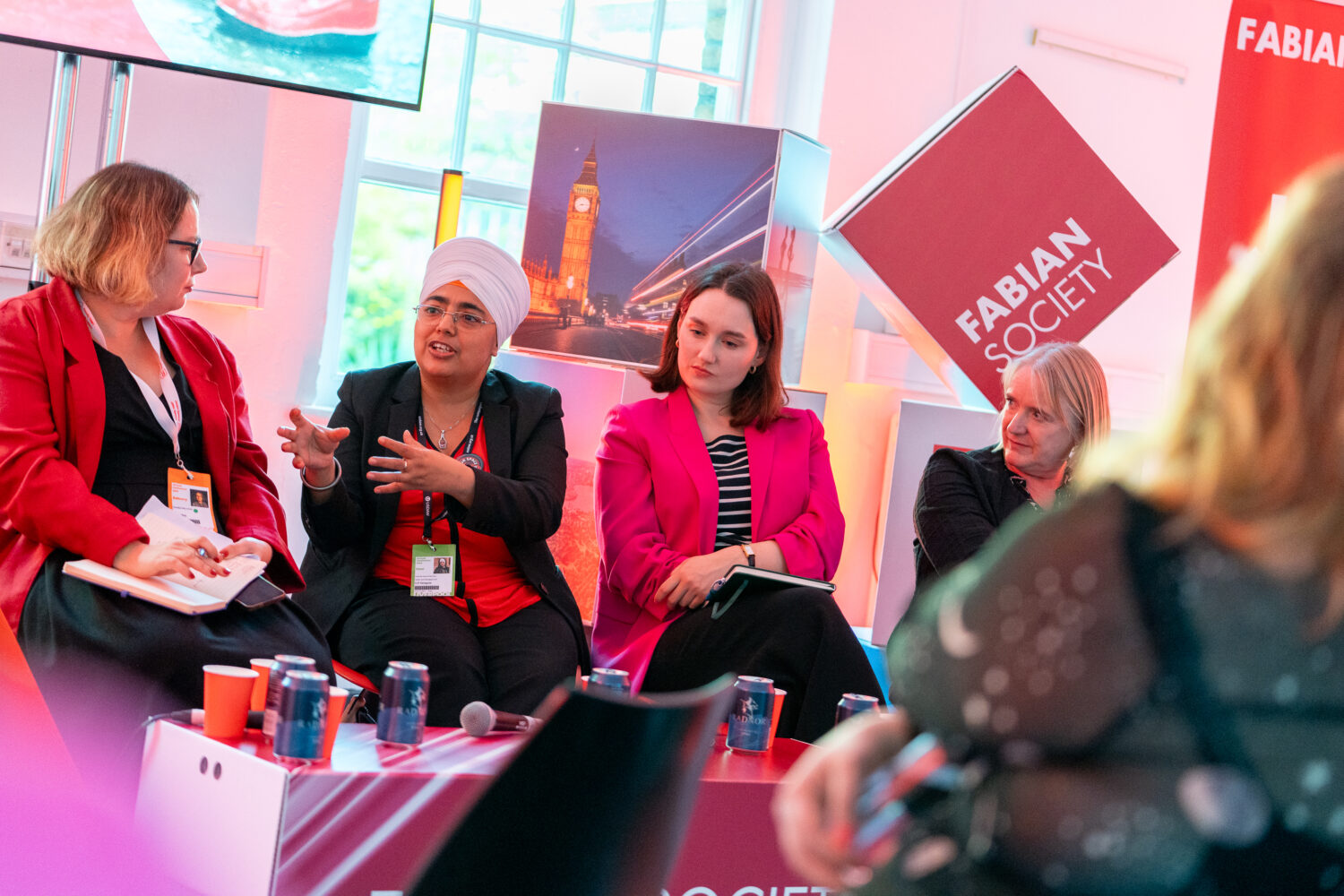
This year marks the 21st anniversary of the founding of the Fabian Women’s Network. The launch happened at the end of January, in the hot and sweaty basement of the old Labour party HQ. We were worried about whether enough people would turn up, but we shouldn’t have been: women not only filled the room but quickly spilled out into the corridor. It was a vindication of our case that women’s voices – and indeed, women’s leadership – mattered for the challenges we were facing. This was true then and it is true now. As FWN comes of age, this article makes three arguments: that women are still not equal; that Labour must be uncompromising in resisting the backlash against women’s rights; and that, in these fragmented times, women around the world must work together.
FWN has a hugely significant role to play. Fabian women – including the chancellor, the foreign secretary and the deputy leader of the Labour party – have led the charge to put the progress of women at the heart of Labour’s missions. Our violence against women and girls (Vawg) strategy, for example, begins a decade-long, whole-of-government, whole-of-society effort to halve Vawg. Through our Plan to Make Work Pay, we are putting in stronger protections for pregnant women and new mothers at work, improving the parental leave system and making flexible working more easily available. In addition, we are taking the first steps towards requiring employers to publish an action plan alongside their gender pay gap reporting.
Our minimum wage rises – the second of which will come into effect this April – will disproportionately benefit women. Removing the two-child limit will lift not only almost half a million children out of poverty, but also 150,000 adults – disproportionately women, who are described by the Women’s Budget Group as the “shock absorbers” of household poverty. And the chancellor has backed the Invest in Women Taskforce, launching a funding pool of over £600m earmarked for investment in women-led businesses, including £100m from the British Business Bank. This is the largest fund of its kind globally, helping to address the enormous barriers to accessing finance women face.
Elsewhere, we are levelling the playing field in industrial strategy priority sectors through the new Women in Tech Taskforce, our TechFirst skills package, and our new target of 35 per cent women’s representation in the advanced manufacturing sector by 2035.
The changing landscape of gender equality
But while this government has women’s equality firmly on the agenda, the battle is not yet won, and the fronts we are fighting on have shifted immensely since FWN was founded. Most worryingly, we find ourselves facing a misogynistic insurgency determined to roll back women’s rights. Instead of developing a policy agenda that can genuinely address the challenges faced by men, as our deputy prime minister is doing ahead of this summer’s men and boys summit, this growing movement argues men’s issues are caused by the advance of women. Meanwhile, new technology now makes it possible for new digital forms of violence against women and girls to emerge. This includes horrendous child sexual exploitation and abuse, the escalation of violence and stalking online, and the sharing of AI deepfakes.
As a result, the political space for equality is narrowing. Speaking to fellow socialist equality ministers last year, I found they faced similar challenge across Europe: centre right parties turning their backs on the equality agenda as they sought support for populist agendas.—These views are informed by, and feed into, an increasingly sophisticated regressive right internationalism– fuelled by TV stations, newspapers, podcasts, YouTube videos and social media. The thinktank #ShePersisteddescribes gendered disinformation as “an early warning system for both backsliding on women’s rights and the erosion of democratic principles and institutions”, while analysts note that Russian disinformation increasingly centres on masculinity.
In the UK, this movement is increasingly influential. Kemi Badenoch said during her leadership campaign that maternity pay had “gone too far”, while Nigel Farage called influencer Andrew Tate an “important voice” for men. In September, I responded for the government in a Westminster Hall debate tabled by Andrew Rosindell, who has now defected to Reform. In that debate, he described the Equality Act as “fuelling… a corrosive culture of grievance” and called for it to be abolished – a view supported by the Conservatives’ shadow equality minister. This would include the rollback of the race equality legislation embedded in the act.
But it is not ‘grievance’ to recognise that a woman made redundant for being pregnant, or one who leaves work because her employer does not make reasonable adjustments for the menopause, leaves us poorer as individuals, as an economy, and as a society.
What Labour must do
Our party has always been a progressive champion of women’s equality: of the 693 women MPs that have ever been elected, 405 have been Labour MPs. But with the challenge to women’s equality now taking place on the international stage, our response must, too. In today’s increasingly fragmented world, voices that connect across national boundaries and strengthen our international institutions are needed more than ever.
Choices made by the postwar Labour government laid the foundations for the institutions that still form the way we connect and build peace across the world. We helped pioneer the United Nations, and Ellen Wilkinson, the Fabian, trade unionist and education secretary, chaired the first conference of Unesco in London 80 years ago. She championed the idea that education, culture and inclusion could be powerful agents of peace and reconciliation –anticipating the women, peace and security framework that the last Labour government did so much to push forward.
We face parallel challenges now as new technologies transform our economy and our society. Which is why, as a Foreign Office minister, I make supporting women’s progress a key part of my visits across the world and my work with partners. In Bengaluru, for example, I announced the return of the British Council’s Women in Stem scholarships in South Asia – providing full funding for masters degrees at leading UK universities. The foreign secretary has put Vawg at the heart ofour foreign policy more generally. For instance, she has launched the All In coalition, which brings together global leaders to end Vawg and introduces new support to tackle the abuse faced by women and girls, including expanding the UK’s leading StopNCII.org, which works with victims and platforms to remove and block non-consensual intimate images.
Conclusion
FWN is just 21 years old. Yet even prior to FWN’s inception, Fabian women wrote pamphlets on child labour, school nurseries, women’s health and equal pay decades before governments took action. The future needs us as much as the past did – with a renewed focus on leadership, impact and influence at home and abroad. Progress does not renew itself. Rights do not sustain themselves. They are defended, renewed and extended because people organise, argue, build coalitions and push.
The Fabian Society has always been a source of long-term thinking in a short-term political world, and our networks have always been networks for change. Together we must build new networks in our communities and with our sisters abroad, renew our determination and bring hope, leadership and change to a new frontline, resist the rollback of our rights and push for continuing progress for women and girls.