Steady ship
Labour must stand firm after Gorton and Denton to hold together its electoral coalition, argues Jimmy Sergi
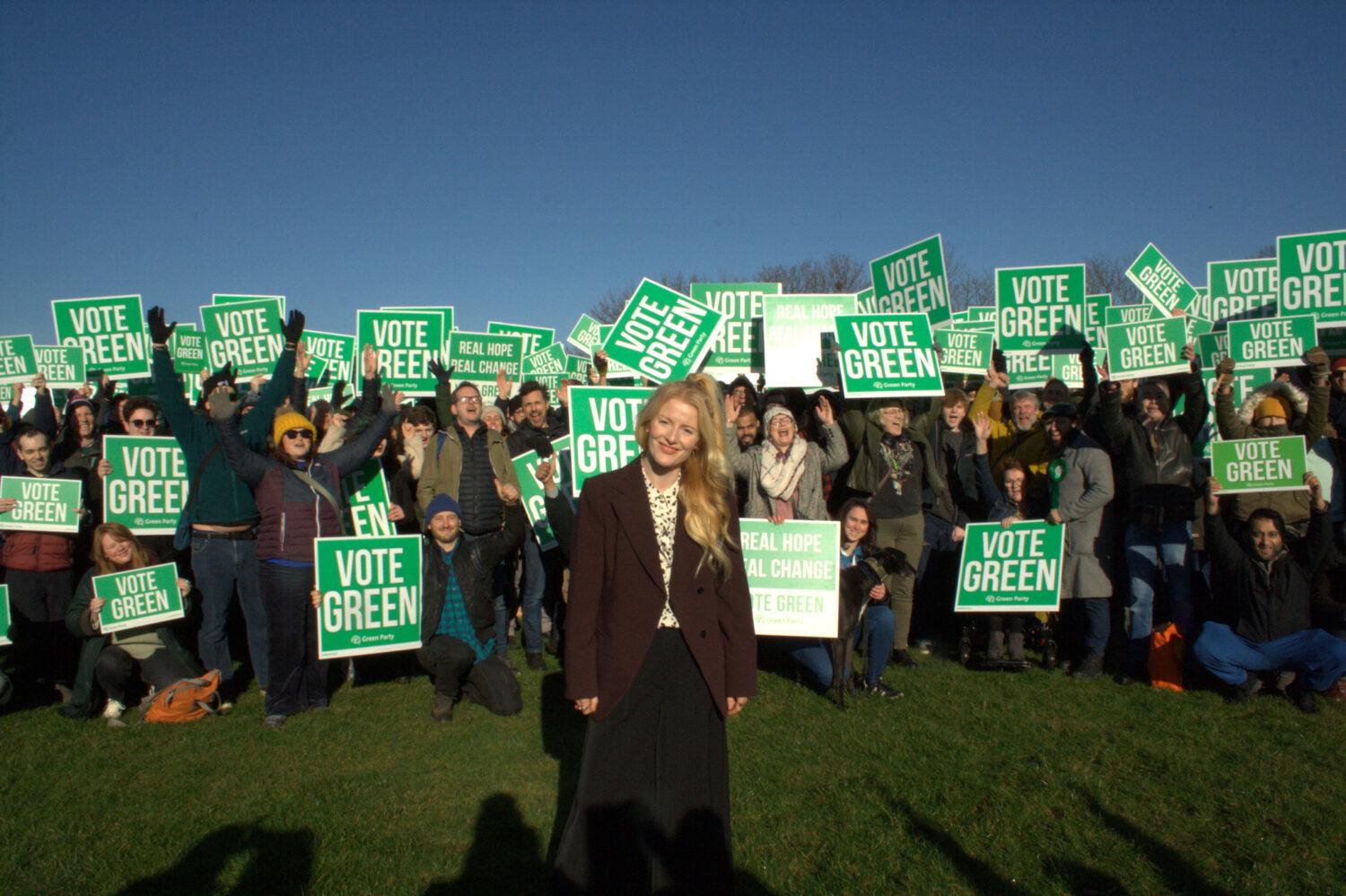
Though rightly overshadowed by developments in the Middle East, the Labour movement is still somewhat reeling from the Gorton and Denton byelection. It’s easy to see why. Prior to this result, the Green party had never recorded more than 10 per cent in a byelection. Yet last month, the Greens convinced voters in Gorton and Denton that they were the force to unite around to defeat Reform. As ever, political analysts from all corners of the party have used the result to advance their own ideological critiques of Labour’s overall direction.
Pragmatists in the Labour movement of course must learn the right lessons from this result. Yet we must not use the result to justify an exclusive and sectional agenda, with no relation to the reality of what voters are telling us. Instead, here is what we ought to learn from the result in Gorton and Denton.
First, we must address what this result was, and what it wasn’t. A byelection in Gorton and Denton is not representative of how the country would vote in a general election tomorrow, never mind in three years’ time. Demographically, electorally, and economically, the constituency is not representative of the electorate as a whole. To take just a few indicators, only 56.6 per cent of residents in Gorton and Denton are white, compared to 83 per cent across the UK, while only 73 per cent of residents were born in the UK, compared to 84 per cent nationally. (In most marginal seats against Reform, the percentage born in the UK is likely even higher.) As a diverse, urban seat, you would expect it to skew more left-wing than the country as a whole. Electoral results from the last century bear that out, as, up until this week, the constituency has exclusively returned Labour MPs.
Attempts by soft-left figures to portray moving leftward as a vote-winner are therefore misleading. Such a shift may well have moved the result of this byelection in our favour. But if we are to remain a truly national party, we cannot be pushed away from the average voter in a state of panic caused by a particularly unique byelection. Different wings of the party understandably interpret the result through the lenses of their existing strategic assumptions.
We must not let alarmism detract from the fact that we held a winning coalition together, and won a 411-seat landslide, just 18 months ago. Of course, the challenges of governing, and the different electoral opposition we now face, mean that it is not as simple as copy-and-pasting the 2024 playbook. Nevertheless, we must not let ourselves slip into a defeatist mindset that it is impossible to hold a winning coalition together. It was only 18 months ago that we united our left and right flanks sufficiently to win a landslide majority, and the splintering of the right-wing vote between the Conservatives and Reform only lowers the number of votes required to replicate this. No byelection result changes the reality that the British people are politically not as left-wing, pro-European, or pro-immigration as Labour’s members, MPs and commentators. Labour can unite both sides of our voter base, and win the general election, but only if we actively improve living standards, get a grip of our borders to tackle the salience of migration, and use our incumbency to deliver tangible benefits for working people.
That’s not to say that we should not change course based on lessons from this byelection. Though we must never lose sight of the fact that the vast majority of our target seats at the next election will be fought against Reform, there will of course be dozens of constituencies where our main challenger is a party to our left (the Greens came second to us in 40 seats in 2024, 18 of which were in London). If the Greens wish to win enough constituencies to form a majority Government, they face even more of strategic bind than Labour in pulling together two ends of a broad voter coalition, a challenge seemingly insurmountable even at their current level of polling. The difficulties Labour has faced winning over middle-ground voters from Reform are dwarfed by the impossibility of Zack Polanski bringing these voters onboard. A more coherent story of the progressive things the Labour government has delivered is urgently needed to stop the leakage of progressive voters and hold our coalition together on its left flank. Crucially, however, this narrative cannot be contradictory to our primary objective of taking on Reform and maintaining our status as the political wing of the British people.
The truth is that we lost this byelection because we refused to enter the fray. Rather than making the wrong argument, we didn’t articulate one whatsoever – as encapsulated by Lucy Powell writing to Zack Polanski early in the campaign urging the Greens to stand aside allow us to beat Reform. Of course, this neatly pre-empted their response in the final days of the campaign urging us to stand aside. In doing so, we abandoned any chance of taking the fight to the Green party, and handed them a golden opportunity to make their own positive case to the constituency. It should come as no surprise that Hannah Spencer scored this open goal.
While in a single byelection, the Greens evidently had the resources to throw the kitchen sink at one constituency, this would simply not be replicable in the 100 or so urban seats the Green party may well have their eyes on for 2029. At a general election, in an overwhelming majority of Labour-held seats, the maximum impact the Greens could have is ensuring that we lose to Reform. To maximise our chances in key constituencies against Reform, we will need to benefit from tactical voting. However, our squeeze messaging can never substitute for a coherent positive message of why we are the right party to govern the country.
We saw a similar mistake in Caerphilly, where tactical anti-Reform voting existed, but Labour again failed to establish itself as the obvious vehicle for it. The ‘Stop Reform’ rallying cry can be effective in getting us over the line in direct fights with Reform, but it won’t bring us up to the level of support required to bring that kind of argument into play. Ahead of the general election, where it is pivotal that we win over progressive tactical votes in straight Labour-Reform fights, it is crucial that we better understand the limitations of squeeze messaging.
Instead, we need to get more comfortable taking on the Greens as a threat of their own. Voters, even Green voters in Gorton and Denton, do not want to legalise hard drugs; according to YouGov, 83 per cent of the public support criminalisation of hard drugs, while 63 per cent believe drug use should generally be treated, at least in part, as a criminal issue. The Greens have also benefitted from never having to deal with the realities of governing. Their commitments on the economy – hundreds of billions in additional spending, wealth taxes levied at unprecedented rates, and sweeping nationalisations – poll well in isolation but would likely fall apart as a full package. We should use their surge in the polls to prompt genuine accountability over the perils of a Green party platform. Our party should be cautiously confident; we stand closer to the British people on a variety of key issues than the Green party, but we need to make that case more directly.
This approach necessitates our party taking ownership and responsibility for the byelection defeat. Hiding behind the excuse of ‘sectarian voting’ being to blame for our poor showing is a problematic and inaccurate distraction from the issues we face. Anecdotally, from my canvassing in the seat, older members of the Muslim community remained remarkably loyal to Labour. While younger Muslim voters did defect to the Greens, this can also be said for their white counterparts. Gorton and Denton is not the kind of seat that elected a Gaza independent in 2024; indeed, it didn’t.
As we head towards the May local elections, the Labour movement should focus on the clear lessons we can learn from the political earthquake unleashed in Gorton and Denton. Beyond the intricacies of this byelection, the next general election is set to be a fight for the soul of our country between Labour and Reform. With incumbent MPs across the country and our level of resources, only we are placed to deprive Nigel Farage of the keys to Number 10. Any attempt to use this byelection to abandon voters and retreat into an echo chamber will only make a Reform majority more likely. We must confront our opponents, not mimic them, to challenge the divisiveness of populist parties to our left and right. Instead of abandoning the fundamental priority of winning over the British people, we must be confident that on key issues – law and order, economic credibility, national security – Labour remains closer to the country than either Reform or the Greens. The Gorton and Denton byelection cannot be remembered as the start of our retreat, but instead as the moment we regained the confidence to win again.
Image credit: Ian Pattison via flickr