A new threat
Reform UK is part of a global backlash against women's hard-won freedoms, argues Anneliese Dodds MP
International Women’s Day is, above all, a moment to celebrate the achievements of women and girls. With more women MPs than ever, and many British women at the forefront of science, business, sport and beyond, we should of course take the time to showcase their brilliance.
It also offers a moment to reflect and recognise progress. The government is clearly building on Labour’s past achievements, like the Equal Pay Act of 1970, in the present day: consider the increase in the minimum wage, improved workplace flexibility, and action against exploitative zero-hours contracts and maternity discrimination. The last Labour government’s then-revolutionary moves against domestic violence have formed a foundation for today’s groundbreaking actions to halve violence against women and girls. And just as the last Labour government listened to women’s calls to improve breast cancer treatment, today’s is focused on renewing the women’s health strategy, including the menopause in the 40+ health check and reducing gynaecology waits.
This year, however, International Women’s Day is different. Because as well as celebrating change and pushing for more, we are faced with the need to protect what progress has been made. Until recently, our country’s political parties all claimed that they shared the value of wanting to see fairness for women. That may have been through different policies, and in the framework of different philosophies, but none sought to suggest that women’s equality had ‘gone too far’.
Reform is, obviously, another matter. My colleague Sarah Owen recently wrote that, in her view, Reform is “fundamentally opposed to women’s safety”. I agree, but I would extend the point.
Labour is not perfect when it comes to gender equality, but recent years’ progress speaks for itself. I was elected in 2017 as one of 119 female Labour MPs; now there are 190 of us, making up 46 per cent of the PLP. In local government, 47 per cent of our councillors are female. In contrast, Reform has only two female MPs out of eight, and at last year’s local elections, fewer than a quarter of their candidates were women. It is committed to abolishing the position of women and equalities minister and repealing the Equality Act. Reform’s candidate in the recent high-profile Gorton and Denton byelection, Matt Goodwin, was revealed to have made comments on social media about women needing a “biological reality” check, and advocated in a 2023 blog post for taxing people without children more. His colleague Danny Kruger has asserted that we (presumably, women…) live in a “totally unregulated sexual economy”. Nigel Farage has met with the American anti-abortion group the Alliance Defending Freedom, who believe that the UK is a soft target for the next leg of their war on women’s rights.
Their message is part of a global rollback of the freedoms of women and girls. Disturbingly, their claims are starting to resonate with some. International research from KCL last year found 28 per cent of Gen Z men think a man who stays home to look after children is less of a man; 60 per cent of this demographic think men are expected to do too much to support gender equality. In many other countries (if not yet the UK), a yawning political gender gap has opened amongst young people, with young men increasingly drawn to anti-feminist parties.
So this year, let us celebrate amazing women – but let us also recognise that progress has been hard won, and sadly, must now be defended. Farage, Goodwin and Kruger cannot be allowed to shift the Overton window when it comes to how women use our time and our bodies or how we keep ourselves safe. Their sexist vision is an import into our country which we must resist. Yes, we should mark positive changes, and push for more – but we also need to consolidate, preserve and protect the work of feminists before us.
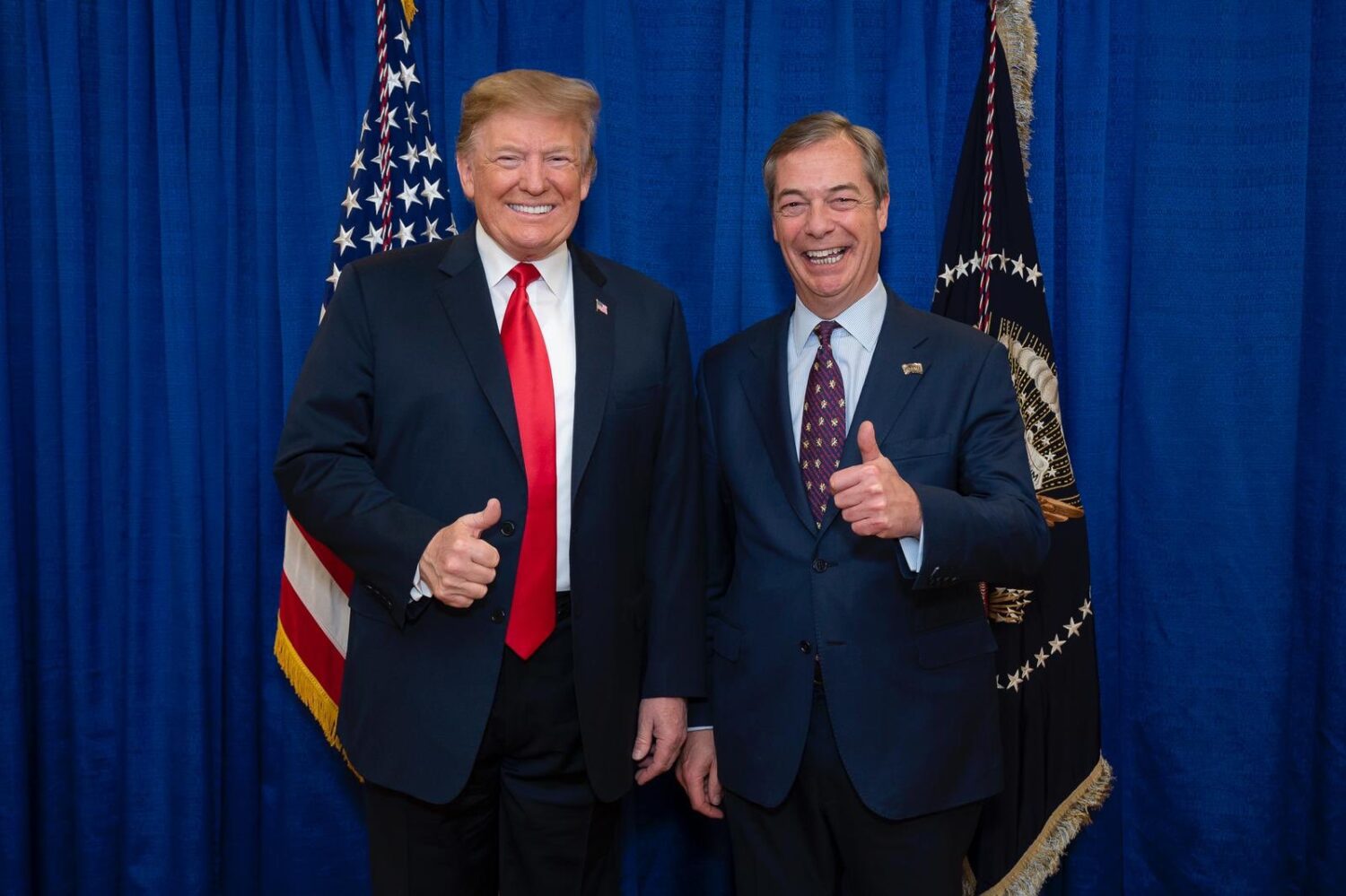
Image credit (main): Official White House Photo by Tia Dufour, Public domain, via Wikimedia Commons
Image credit (N&I page): Gage Skidmore from Surprise, AZ, United States of America, CC BY-SA 2.0 via Wikimedia Commons