Beyond transparency
Clarity around political gifts and donations is valuable - but not enough, write Alex Parsons and Julia Cushion
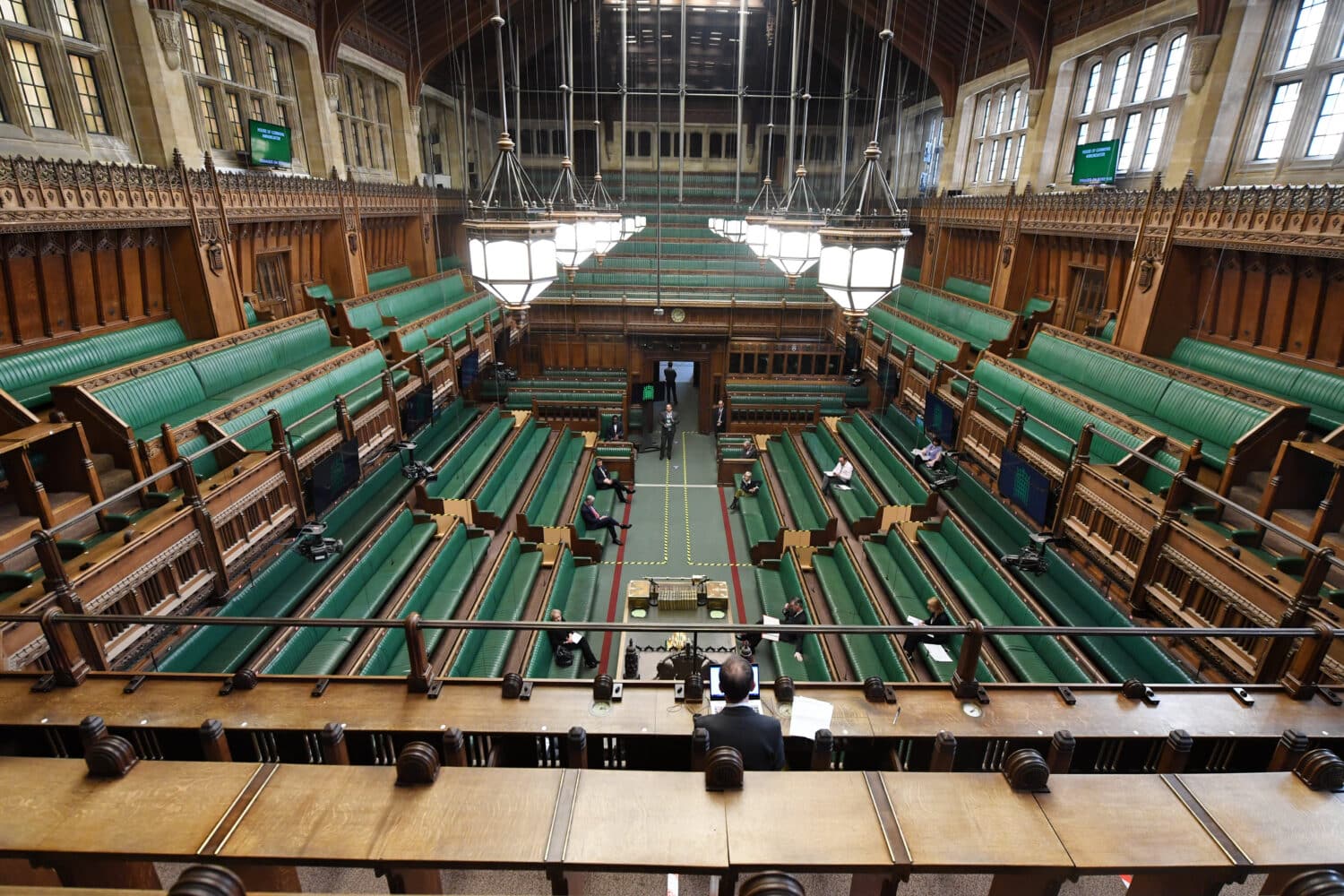
When it comes to trust in politics, there is much that could be done to improve transparency around MPs’ financial interests. But transparency alone is not enough. If we are to rebuild faith in our democratic system, we need tighter rules around what sort of activity is permissible – and, consequently, to explore new ways of funding politics.
One of the things we want to achieve through TheyWorkForYou.com is improved information about our representatives’ financial interests. After the election, we worked with a group of volunteers to go through the Register of Members’ Financial Interests (RMFI) for all MPs – aiming to add context and links for improved analysis. What we found illustrated thelimits of transparency alone in bringing change.
The register’s initial creation, and subsequent waves of improvement, were both in response to scandals that brought specific MPs, and parliament in general, into disrepute. Increased transparency represented a big concession, but it was also a conscious move to avoid more restrictive rules – specifically, enforcement through new laws and outside agencies.
Improved transparency has value. However, in a perverse way, it can muddy the waters. Some politicians argue that so long as their interests have been “disclosed” they have been implicitly approved. Scandals sit completely in the open until a sudden mood shift makes them a problem.
The idea of “the electorate” is often used as cover for unethical activity. The argument runs that re-elected MPs have had their outside interests endorsed by the voters. This is despite the fact that, when asked, the public clearly supports stronger independent standards and fairly hard limits on second jobs.
All of this leaves us with the status quo: a half-hearted approach to transparency which is unsatisfying in practice, and, when it works, mostly just accentuates that parliamentary rules are massively out of sync with what the public thinks should be allowed.
Improving the data
A key problem our volunteers found was poor data quality. We knew we would need to supplement the RMFI with manual research. But what we learned is that, even with supplementary research and analysis by volunteers, a lot of data is unfixable. Some questions that seemed relatively straightforward –such as “which MPs currently have second jobs?” – turned out to be difficult to answer because of gaps or contradictory disclosures in different fields. In this specific case, we found a recurring problem: income being declared when the MP was first prompted to complete the register after the election, but not being updated afterwards, leaving huge amounts of income information out of date.
Fixing this demands an institutional focus on data quality. Parliament needs to stop treating poor quality disclosures as merely problematic for individual members and instead recognise their effect on the standing of the institution as a whole. Poor compliance with the rules contributes to a negative spiral of lower standards and lower public trust. Clerks should feel empowered by the collective support of MPs, most of whom want the system to work, and support them to make good declarations – including prompts for updates – and have clearer validation rules and rejection standards for poor-quality declarations.
Building on better data, we need tighter rules for disclosure. This is clearest when it comes to gifts and freebies, where standards for disclosure are out of sync with wider good practice and public expectations. We need a lower floor for disclosure, and the idea that there are some gifts it is inappropriate to accept.
The current £300 limit before a gift needs to be declared is too high. As (now former) MP Scott Benton told an undercover reporter: “you’d be amazed at the number of times I’ve been to [the] races and the ticket comes to £295”. A lot of expensive gifts can plausibly be priced at under £300. In some areas, councillors have far stricter rules on disclosures than MPs, with Merton council requiring gifts of £25 or greater to be registered.
This high limit creates a substantial missing data problem – one which means we often don’t feel we can be confident in saying :“this MP didn’t receive any freebies”. To pick on one example, in June, one MP declared a pair of football tickets valued at £580 – and because of this, needed to retrospectively declare a £110 ticket received in April, since the limit applies to all gifts from the same source. If things had panned out differently, we simply wouldn’t know about the smaller donation. The data is missing all these smaller, undeclared gifts – the sum of which could be huge.
It is not just that the threshold is too high; there is also the fact that there is nothing in the rules about gifts it would be inappropriate to accept. In contrast, guidance for civil servants is much more rooted in offences under the Bribery Act. The code of conduct for MPs should be revised to lower the declaration limit and introduce guidelines around whether MPs should accept certain types of gift at all.
Funding politics
When you start chasing the problem of bad data, you inevitably end up face to face with the issue of how we fund politics. The scale of gifts and freebies is minute compared to the large donations made to parties and candidates. The problem is that we will struggle to introduce donor caps or stronger conflict of interest rules so long as a major way we fund the democratic system is via large donations.
The UK is an outlier in both European and anglophone countries in having very little public funding for politics. Letting the rich pick up the bill is a false economy if the influence they receive in return is to our disadvantage. If we want politics to work in the public interest, we collectively need to pay for it.
This is not massively popular – but then again, neither is our current system, and in public attitudes work, funding becomes more popular when the problem of big donors is raised. A range of different approaches need to be explored if we are to find an approach that is right for the UK. Rather than European-style direct subsidisation of parties, Canada might be a good example to pull from, with top-ups of small donations and reimbursement for campaign spending.
In other areas, increases in existing public subsidies, such as short money and policy development grants, would remove a dependence on external secondees for opposition policy development. These measures, in combination with spending and donor caps, would control costs and help us shut big money out of politics.
Pushing for change
We think that there are other changes that could improve transparency from the outside and empower reformers on the inside to go further.
At a basic level, more could be done to get parliament to follow and enforce its existing rules by flagging invalid disclosures for correction and connecting datasets to make under-disclosure in debates and parliamentary questions more visible. Making sure information about MPs accepting freebies is easily accessible could help keep the pressure on for rule changes.
On the question of public funding, the lack of public support is often presented as a major obstacle, but is often merely cover for a lack of progress. To shift the dial, we need to build a better view of public attitudes on the various options and trade-offs. Our view is that this isa problem a citizens’ assembly would be well equipped to handle. Deliberative democracy is a useful anti-corruption device since it avoids the conflicts of interest present when politicians set their own rules; it also produces more nuanced views than polling
While ideally an assembly would be commissioned by parliament itself, it does not have to be – and it would have a lot of value if convened by civil society to move the debate forward. Sharper information about public preferences – and, importantly, trade-offs – would help inform wider campaigning and civic action. Joining civic power to deliberative democracy would provide power in one direction, and legitimacy in the other – a powerful combination.
Image Credit: House of Commons via flickr