Crux of the matter
Fixing our broken democracy must be an immediate priority, argues Stephen Carter
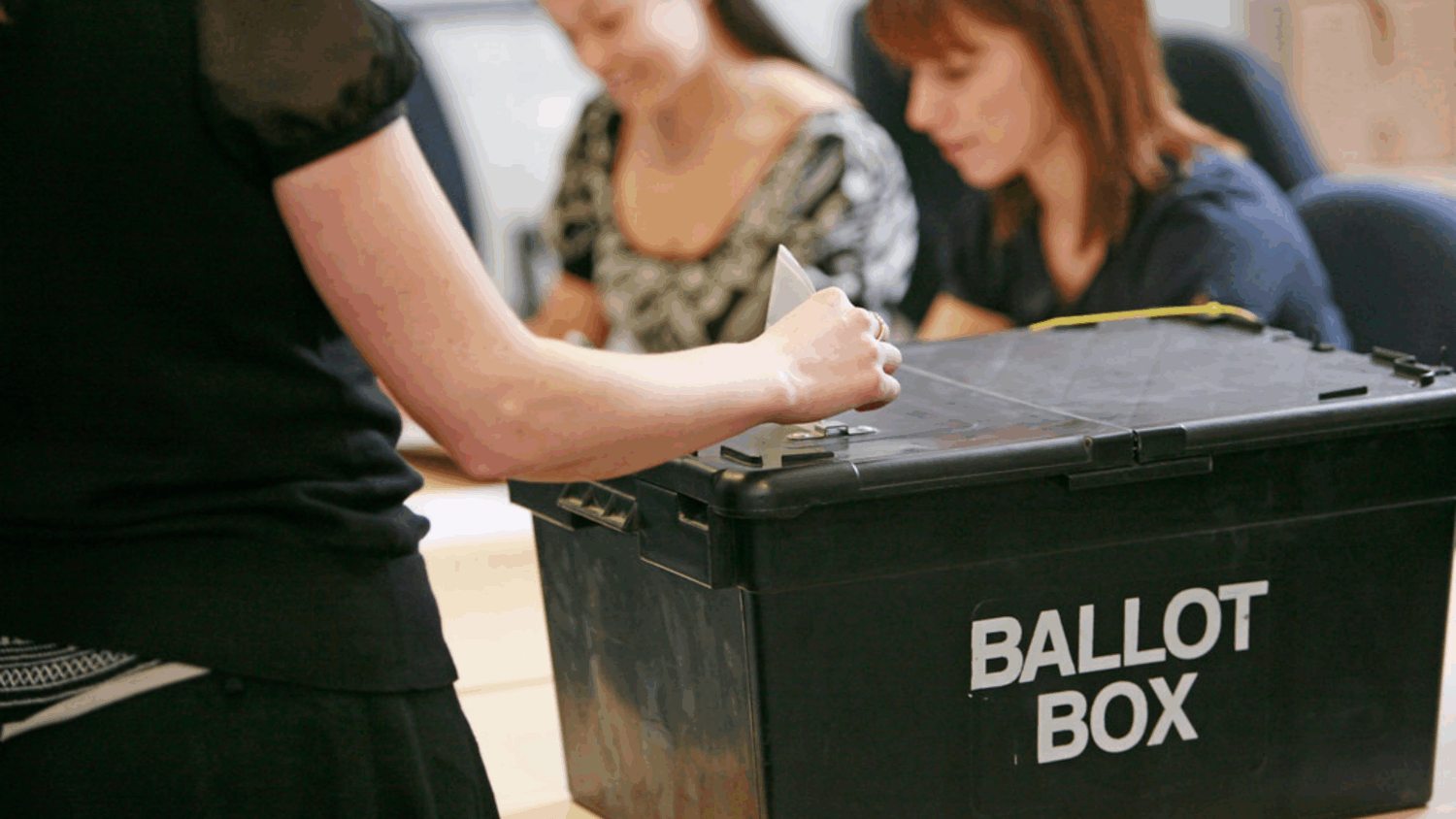
Amid all the challenges facing Labour and the country, the state of our democracy may seem a second order, second-term priority. The system delivered a Labour government. Why mess with it? But the state of our political infrastructure is not just a matter of democratic ideals. It is a matter of national security: an essential defence against both long-term decline and much more immediate attacks. Political infrastructure is critical infrastructure, even more than our roads or our defence industry. And amid proliferating threats, it is increasingly unfit for purpose.
The first sign of the rot is a crisis of faith. Almost 80 per cent of us now believe our political system could be seriously improved. Only 22 per cent have confidence in parliament. Just 13 per cent trust the media – among the very lowest internationally. Trust in the civil service, police, and judiciary is higher, but has still fallen substantially. Those most desperate for positive change – like the economically struggling and Brexit supporters– are the most likely to feel disempowered. Incredibly, more than half of young people think the UK should be ruled by a dictator.
The problem is that there is some justification for this cynicism. Our first past the post voting system is deeply unrepresentative, effectively disenfranchising almost three-quarters of voters and regularly handing parties solid majorities on little over a third of the vote. Last time, Labour profited; next time it may well be Reform. Parliament has its own issues. It has less ability to hold the government to account or set its agenda than similar legislatures. Worse, governments increasingly bypass it entirely through so-called Henry VIII powers. With the UK still more centralised than almost any comparable country, regional or local governments cannot provide enough of a counterbalance.
The problems go beyond structural issues. Our democracy is undermined by an insidious lobbying industry and gaps in funding rules which allowed the Tories to receive millions from Russia-linked donors even after 2022 (and could allow Elon Musk to pump millions into Reform). The media is no better. Three companies essentially control our newspapers; a handful of billionaire owners dominate social media. Regulators are failing to adequately counter the threat of creeping “Fox News-ification”of broadcast media. Libel lawfare has increasingly stifled smaller operators, while local journalism – relatively trusted and crucial to healthy communities – has suffered huge declines.
Social media might partly explain the global rise in right-wing populism. Even as we slip into information silos and the very concept of truth bleeds out of public discourse, Zuckerberg is redefining fact-checking as censorship. It is clear that self-regulation has failed. These flaws in our democracy undermine us in two critical ways, interlinked and mutually reinforcing: they mean we make worse policy, and they leave our politics itself more open to the viruses of charlatanism, populism and outright subversion as trust and engagement decline (not least as a result of that aforementioned bad policy).
If we could ever afford the luxury of these weaknesses, we cannot now. Our political immune system is compromised just as it faces virulent new threats. First, our era increasingly confronts us with existential challenges– ones that need us to make difficult decisions and confront deep special interests. From the climate crisis to public finances, they are testing our politics, and the stakes are incredibly high. Second, our democracy itself is under unprecedented pressure from multiple directions. Russia, Iran and others are aggressively working to manipulate our social media and undermine our politics. Russia, especially, has attempted to subvert referendums and elections in the UK, US, and Europe. China has hacked our electoral commission. This is not incidental harassment: it is a deliberate strategy to use our political vulnerabilities to break us by both exploiting waning trust in politics and seeking to fuel it. It is the frontline of a de fact cold war.
Even more worrying is America’s vertigo-inducing abandonment of its role as a standard-bearer – however flawed and inconsistent – of democracy. Rather than countering rising global populism, Trump actively encourages it. the British version of that rising populism is the other threat to our security. This is partly about the policies populists seem to favour – in Trump’s case, embracing dictators, tearing up alliances, destabilising economies, and gutting intelligence expertise and scientific research. But there also a qualitatively different threat, to democracy itself.
Trump is systematically attacking checks on his power, from the Federal Reserve to Congress itself. He literally has troops on the streets. We must not be naïve about his agenda. Would a British Trump do something similar? Maybe not. Whatever happens here will not be a carbon copy – and there are countervailing forces in both countries, not least the deep unpopularity of populist policies when they are actually implemented. But our populists explicitly emulate Trump, and think tanks close to them are pushing Project 2025-style plans to remove checks on government. We must not be naïve about their agenda either.
Boris Johnson already showed us the fragility of our constitutional guardrails – so reliant on convention – in the face of a brazen leader. Only tradition prevents a PM from, say, appointing a thousand new peers to take over the Lords. And FPTP can hand a populist the keys to our celebrated ‘elective dictatorship’ with frightening ease compared to proportional representation. On present polling, that is exactly what will happen. It may all fadeaway – or it may be worse than we fear. But either way, the risk is more than enough to demand action.
So what do we do? We certainly need to tell a better story. But to counter populism merely by more eloquently defending the status quo is to court irrelevancy and defeat – because however dressed up in hate and lies, demagogues could not find the audience they have done without tapping into real issues and fears. Those include both direct frustrations – from stagnating incomes to unaffordable housing – and the underlying sense of disempowerment cutting across them. A compelling narrative needs to address these issues with substance, credibility, and courage. We do not need mindless radicalism, but we do need to be bold – carefully and rigorously – where boldness is needed.
Populists attract support because they promise action. Progressives need that same reputation. And a progressive alternative would have the great advantage of being a genuine attempt to tackle the problems we face, rather thana con which empowers plutocrats while making ordinary people worse off.
While the need for action covers many areas, political reform is arguably the most important for three reasons: because the better policy needed to address other problems is only sustainable(or even possible) with better politics; because the visceral sense of disempowerment behind ‘take back control’ is the most potent fuel of populism, and the overarching heart of its message; and because there is an immediate practical need to strengthen safeguards against undemocratic power grabs.
For Labour especially, democratic reforms represent both a golden chance to create a truly lasting legacy – by changing the system, not just the policies – and that rare gem: a powerful intervention that is essentially free. They will need to address three great areas of weakness: our formal democratic structures, the wider problems of money and influence, and the information environment. Structural reform should include a more representative voting system, strengthening the Commons, renewing the Lords with regional and national representation, reforming the appointments of peers, and stronger devolution. Wider reform should include tighter transparency requirements for think tanks and substantially stronger lobbying and funding rules: in short, getting money out of politics.
Fixing the information environment poses real dilemmas, but at a minimum, we need stronger moderation requirements, stronger consequences for clear-cut abuses, a reinforced Press Complaints Commission, and reformed ownership rules. We should also emulate EU protections like the Digital Services Act and actively promote media literacy as Finland does.
This is a broad, challenging agenda – as broad and challenging as the problem we face. There is plenty of room for debate on the details. But it is hardly rocket science. The first step, though, is a fundamental change in mentality. Strengthening our political system is not something we can afford to delay. It is a matter of national security in both the short and the long term – a response to a danger as urgent and organised as any since 1945. It is time we treated it as such.
image credit: electoral commission via flickr