More tea, less vicar
Christian nationalism seeks to turn back the clock on social progress - the government must make the case for secular state, argues Andrew Copson
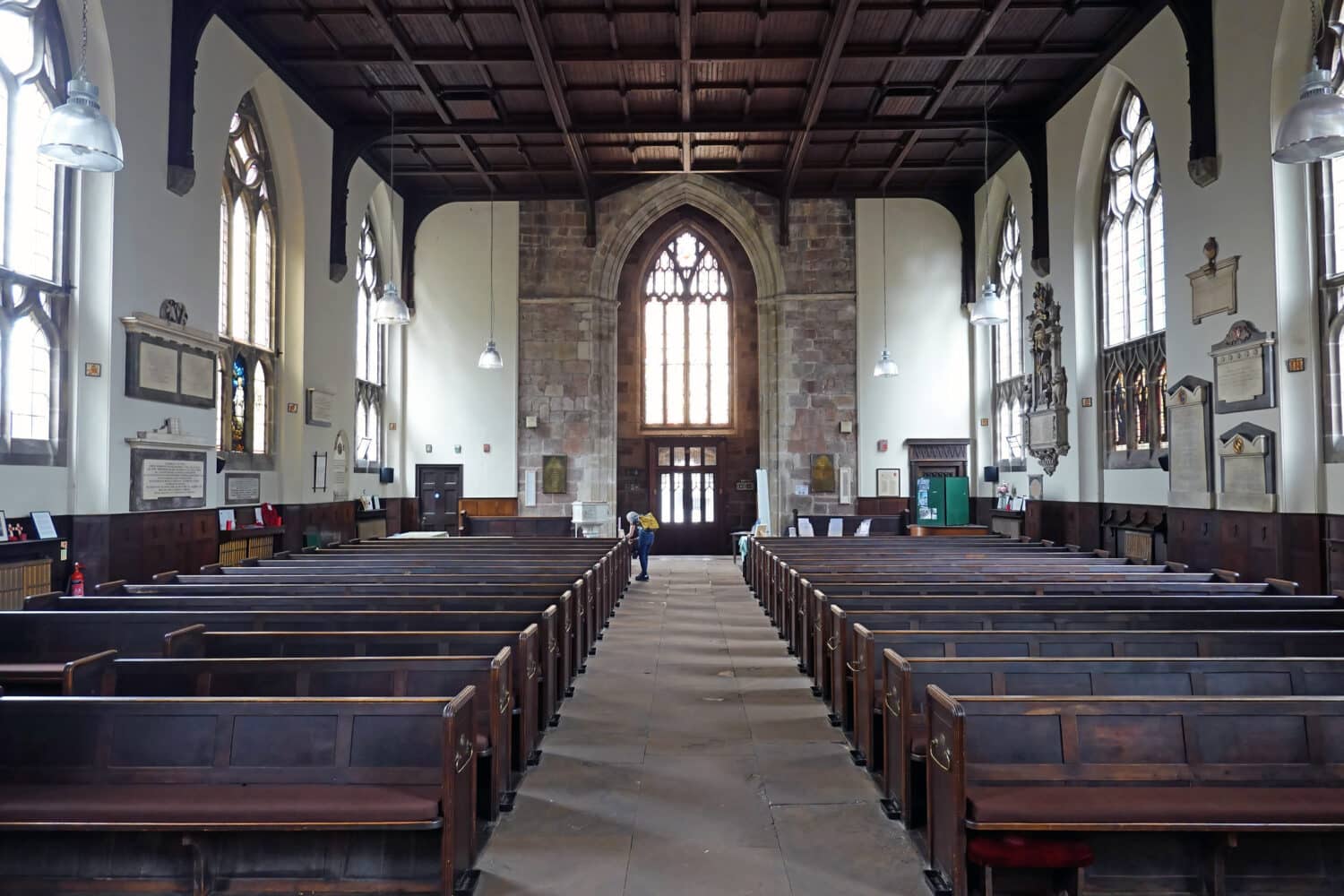
Christian nationalism seeks to fuse politics with Christianity and have the government promote or actively enforce religious interests and policies. It is opposed to the separation of church and state and to pluralism, including learning about other beliefs and cultures in state schools. Christian nationalists advocate ultra-conservative Christian social policies, opposing the human rights of women, LGBT+ people, and rights to bodily autonomy in areas like abortion and assisted dying. Many British progressives feel horror at the movement’s many policy successes in the US: not just abortion bans and library censorship, but a broader philosophical victory reflected in official rhetoric casting the US as a Christian nation, alongside a global security strategy that aims to export Christian nationalism. But should our horror now turn into domestic apprehension?
In September 2025, at Tommy Robinson’s Unite the Kingdom rally, marchers hoisted crosses and flags proclaiming “Christ is King” while ceremonially destroying a banner inscribed “humanism” and “no religion”. Weeks later, the King’s Army, a ‘spiritual army ‘founded in 2024, marched in black shirts through Soho, central London’s LGBT+ district. The group frames its activism as a war against cultural decay.
This street agitation has its partner in high politics. Reform MP Danny Kruger has called for Christians to “destroy” and “banish” a modern creed that he characterizes as a mix of paganism and heresies. The National Conservatism movement, currently hothousing a new generation of right-wing activists, is drenched in Christian nationalism, and its UK chairman is the new head of policy for Reform UK, which is leading voting intention polls.
There is substantial funding behind this shift. As reported by openDemocracy, American evangelical groups have poured hundreds of millions into European advocacy. Domestically, figures like Paul Marshall, owner of the Spectator, argue that British liberalism has lost its way by abandoning the “Judeo-Christian understanding” of humanity as fallen creatures. He has invested in organisations explicitly dedicated to the “evangelisation of the nation” and the “transformation of society.”
Will the UK follow in the US’s footsteps? When contemplating the old US religious right, we always said: “It couldn’t happen here. Britain is different.” And in some important ways, of course, we are different. While the US is becoming less religious each generation, most people do still identify as Christian. By contrast, Britain is not a Christian country in any meaningful way. Surveys show that over 90 per cent of people don’t attend Christian services; over 70 per cent of people don’t have a Christian belief system; and over 60 per cent of people don’t have a Christian identity. Our national culture, though shaped in part (for good and ill) by Christian ideas and values, has also been shaped by pre-Christian, non-Christian, and post-Christian ideas (with the latter category having done more than any other to shape our modern social democracy). We have some of the lowest levels of religious belief, practice, and identity in the free world, and far lower levels than the US.
On paper, of course, we are a Christian state that an American Christian nationalist would give their right arm for. Our head of state has to be Christian by law; our national ceremonies are presided over exclusively by Christian priests; most of our state schools are mandated by law to have Christian worship, and a third of them can show preference to the children of Christian parents in admissions; state hospitals and prisons have Christian chaplains at public expense; and the law mandates that most school curricula about religion and philosophy must give priority to Christianity. Every day, the proceedings of our national parliament begin with Christian prayers presided over by the state church. That same parliament contains voting representatives of the state religion – a constitutional outrage mirrored only in Iran.
But in spite of our theocratic constitution, the trajectory of our recent history has been in the opposite direction to the US. British ‘pragmatic lawlessness’ means that rules on worship in schools and others are mostly flouted. Moreover, while maintaining its staggering wealth and elite influence, over the last 150 years or so, the state church has largely bowed before a progressive secular tendency that has created a space for increasing freedom of conscience in practice.
This complacency, however, is dangerous. Christian nationalism is not primarily a theological project; it is a political one based on identity and culture. The background conditions for it exist in the UK precisely because of our state religion. In Matlock in Derbyshire, Reform councillors reintroduced Christian prayer to council meetings on the basis that the UK was a ‘Christian country’. Despite progressive dismay, one could ask: how is this different from the Christian prayers every day in the House of Commons?
In Northumberland, a Reform councillor on the council’s religious education committee said he wanted exclusively Christian RE in schools because this was ‘a Christian country’, calling any other approach to RE ‘brainwashing’. Again, one could ask: how can we deny this when our national law requires Christian worship in all schools?
The risk in Britain is a top-down, elite-formulated nationalism that weaponises “Christian identity” against modern pluralism, and demands conformity not to belief in the resurrection, but to Christianity as a cultural fortress. It claims that British liberty and rule of law are the exclusive property of Christian heritage, neatly categorising non-Christians as suspicious outsiders. When politicians argue we must protect “Christian culture” from immigrants or “cultural Marxists,” they are using the cross as a bludgeon in the culture wars.
For Fabians, rooted in the patient accumulation of facts and the application of reason to social problems, this identity-based politics is particularly dangerous. The Fabián tradition relies on the belief that good governance is the product of rational inquiry, evidence-based policy, and expert administration. When dogma and identity replace data as the basis for policymaking, the project of gradual amelioration becomes impossible. We see this in attacks on the “administrative state” or the “blob,” where civil servants are denigrated because their technocratic neutrality – a product of the secular state – is seen as an obstacle to reshaping society.
Furthermore, Christian nationalism strikes at the heart of Fabian universalism. The welfare state depends on a shared citizenship that transcends private beliefs — a social contract where every citizen is equal. Christian nationalism fractures this solidarity by introducing a hierarchy of belonging, suggesting the “true” citizen is the “culturally Christian” citizen. By elevating sectarian identity over universal need, it undermines the collective ethos necessary to sustain public services. The left’s response must be a robust, unapologetic commitment to secularism, a position that progressives have been squeamish about for far too long, fearing it appears anti-religious. We must reclaim the term. Secularism is not atheism; it is a framework for ensuring equality in a state where no one is privileged or disadvantaged on the basis of their beliefs.
This approach will encompass constitutional, policy, and cultural responses. Constitutionally, we must finish the work of disestablishment. The link between church and state leaves the door ajar for Christian nationalism. Severing it would signal that power in modern Britain flows from the people, marking a transition from “tolerance of others” to “equality for all.” We should recentre human rights and equality law as quasi-constitutional in our system.
In education, we must end state-sponsored segregation. This means closing loopholes that allow faith schools to discriminate in admissions and employment. The curriculum must evolve to offer an objective “Religion and Worldviews” subject, as recommended by the Commission on Religious Education. We must repeal the archaic legal requirement for daily collective worship, replacing it with inclusive assemblies that celebrate shared values. Most of all, citizenship education must be revived to emphasise the secular basis of our democracy.
Culturally, we must offer a compelling alternative to the “Christian Nation” narrative. We need to build a national identity based on shared democratic values. This will require a state-supported cultural shift – through the BBC, national museums, and public ceremonies – to reinforce a civic patriotism that represents the reality of modern Britain rather than a mythological past.
Christian nationalism in Britain is an attempt to turn back the clock on social progress. It seeks to divide citizens by culture, in part to distract from the economic inequalities it cannot solve. Many of its aspects were familiar to the first Fabians as elements of 19th century conservatism, but today we must recognise this threat anew, and act to forestall the reoccupation of our still-Christian state by the enemies of progress.