Silent majority
Tackling the climate crisis depends on uniting a wider cross-section of voters, argues Tim Root
On 1 December last year, Keir Starmer made a major speech centred around Labour’s second budget. In it, he did not even mention the climate emergency. That day, the death toll from cataclysmic floods in South-east Asia passed 1,000, with nearly 600,000 people evacuated from their homes on the island of Sumatra alone.
Rachel Reeves had also failed to mention the climate once in her BBC interview the day before. This lack of attention has been reflected in policy. The government’s Warm Homes Plan will cut fuel poverty and emissions slowly, but much more funding – around £6bn a year – is needed. The government also gave its approval to Heathrow’s £33bn plan to build a third runway. The notion was that this would boost growth, despite the fact that Britons who fly abroad spend much more abroad than tourists to Britain spend here.
These decisions are in keeping with the government’s previous disregard for climate breakdown. For instance, its June 2025 spending review allocated £24 bn for roads on top of the £9bn cost of the Lower Thames Crossing. While the train fare freeze is welcome, UK train fares are the highest in Europe. Progress at Cop 30 amounted to only “some baby steps”.
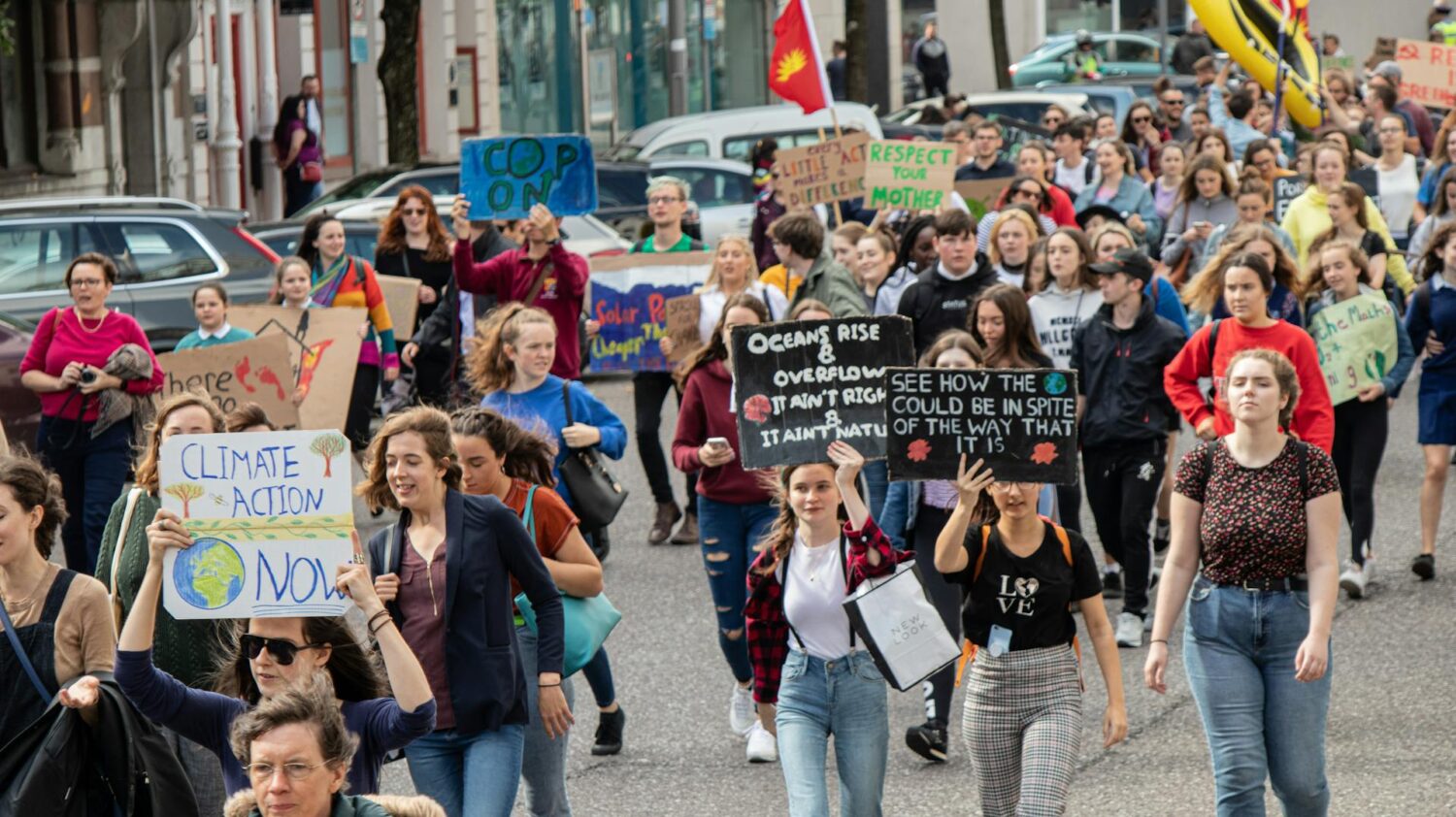
All this shows that climate campaigns urgently need to become much more effective. Campaigning has seriously declined in recent years. In 2019, the Climate Coalition held a lobby of MPs attended by over 12,000 people. However its “mass lobby” in July 2025 attracted only about 5,000 people.
Huge potential support
Recent research suggests that we can tap into a powerful latent climate action movement if we can show people that, contrary to their perceptions, most other people share their wish for stronger climate action. One experiment in the US found that, when participants were given $450 (£339) and were invited to donate some to a charity that cuts carbon emissions, the average person gave away about half the money. If the participants were told beforehand that the vast majority of other people think climate action is really important, donations were boosted by an average of $16.
The good news is that there really is an overwhelming majority in favour of taking greater action against global heating. A global survey conducted by researchers at the University of Bonn found that 89 per cent of people want their government to do more to tackle climate change, including 97 per cent of people in China and 74 per cent in the US.
Globally, one and a third times more people rate themselves as being right of centre than those who rate themselves left of centre. And in the 2024 European parliament elections, conducted using proportional representation, right of centre parties won 1.6 times more seats than left of centre parties. At first, there might seem to be something of a contradiction here. However, a 2023 twenty-three nation survey found that people who identify as being on the right are only 13 per cent less supportive of climate action than those who identify as left-of-centre. If we limit ourselves to voters on the left, then, we will be leaving much of the global ‘silent majority’ behind. It is vital for climate campaigns to attract mass support from across political spectrum. After comprehensive research on many social movements, the eminent scholar Erica Chenoweth concluded (p.83) that “the larger and more diverse the campaign’s base of participants, the more likely it is to succeed”. This is chiefly because politicians feel they have a stronger need to respond to demands made by a widely representative swathe of society. We can learn from the exceptional success of the 2005 Make Poverty History campaign alliance, which brought together several hundred organisations.
This is not where we are today. As the Climate Majority Project put it, the climate movement’s tone and culture “appeal mainly to the ‘far left’ – a small segment of the population”.
Unity is strength
A campaign alliance fronted by prominent people from different political parties would be likely to gain public confidence. Research has found that most people believe that political parties should work together, and such a campaign would suggest that the climate is so important that people from different political perspectives had put their differences aside. However, the climate campaign alliances which I have researched comprise almost entirely environmental or left of centre organisations, but hardly any right of centre or mainstream religious organisations.
A more mainstream image would protect our movement’s reputation from a perceived association with the tactics of groups such as Just Stop Oil, and Letzte Generation, which are regarded positively by only a sixth of their compatriots.
Youth climate activists could boost the success of a broad alliance. Research on X use showed that youth activists have strong moral power that enables them to exert a positive influence. In December 2024, I undertook a small survey in a demographically diverse range of locations in London, asking people to rate the effectiveness of a few climate campaign slogans. Fifty-nine per cent rated ‘Save our kids’ climate’ as very effective, and a further 25 per cent rated it somewhat effective. It was the slogan considered most effective by quite a large margin. ‘Climate justice’ was rated very effective by only 10 per cent, and somewhat effective by 30 per cent. Other research analysing people’s reactions to climate messages found that “We owe our children a better future, but if we don’t act, they will pay the price” was overwhelmingly the favourite.
Achieving a coalition of organisations representing people with different political outlooks may appear extremely difficult. However, very difficult goals have been achieved on previous occasions, including same sex marriage and international negotiations to protect the ozone layer. Research shows that groups which discuss the priorities they share and cannot achieve separately, known as superordinate goals, make better progress. There are a number of models for facilitating constructive collaboration among disparate groups and individuals.
To build a successful campaign alliance, we need to harness the factors that unite participants rather than divide them. The alliance’s message needs to be simple: that climate disaster threatens all humanity. Getting sufficient support would be less likely if other goals, however important, were highlighted, because:
- Some potentially valuable partner groups would not join the alliance.
- Many potential supporters would not relate to some of the goals.
- Their inclusion would dilute the key message and its impact.
- Their addition would make the campaign’s objective appear even more difficult, and hence unrealistic, in many people’s eyes.
Member organisations of the alliance would of course be able to campaign separately on other issues.
Martin Luther King once said: “We must learn to live together as brothers, or perish together as fools.” Climate campaigners need to work together, or suffer tragic failure.
Image credit: Robin Erino via Pexels