All that is solid
NATO’s principles of co-operation and coexistence must be defended against increasingly hostile foreign actors, argue Paul Richards and Gary Kent
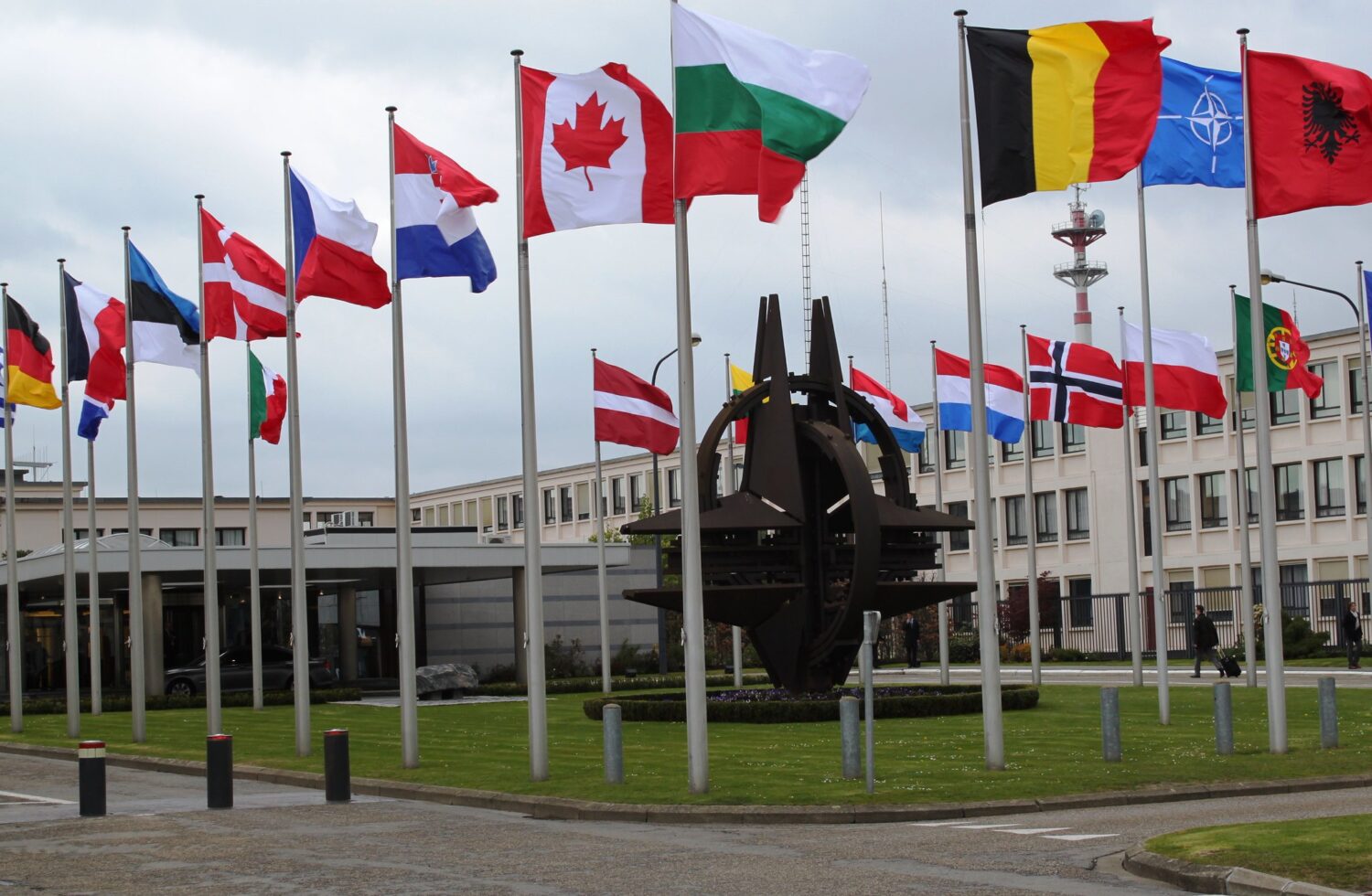
In 1848, Marx and Engels surveyed revolts and revolutions across Europe and concluded: “all that is solid melts into air”. Today, we live in times no less tumultuous than those which forged the Communist Manifesto. Every kind of institution, and every assumption that underpins them, is under threat. National bodies, from the BBC to the Conservative party, are being disrupted by technology and buffeted by populism. International bodies – the UN, World Health Organization, the EU – are similarly under threat.
The institution which counts the most, on which we depend for our everyday liberties and way of life, is the North Atlantic Treaty Organisation, or NATO. Yet in recent months, even this great institution feels like it is on thin ice. Donald Trump’s erratic foreign policy; his disdain for international bodies; his creation of a ‘Board of Peace,’ which manages to be simultaneously risible and sinister; and his world view of competing empires ruled by powerful emperors; taken together, these unprecedented shifts present the greatest threat. At home, the idea of NATO is increasingly challenged by the anti-NATO Green party the pro-Russian populists of left and right.
NATO, the military alliance of 30 European and two North American nations, has defended our borders and protected our peoples since 1949. It has survived seven decades – through the Soviet invasions of Hungary and Czechoslovakia, the collapse of the Soviet Union, 9/11, and beyond – because it is anchored on a simple premise. That premise is that an attack on one is an attack on all. This is expressed in Article 5 of the treaty, and it has stopped aggressors from picking off the weak because they are protected by the strong.
This is a progressive idea. It is no historical accident that it was a Labour foreign secretary who signed the Treaty on behalf of the UK. Nor did the idea fall from the sky. Back in 1916, the great Fabian internationalist Leonard Woolf wrote a pamphlet for the Fabian Society on ‘international government’. He envisaged a world beyond war and empire, with democratic nations working together. He believed ‘the violent but narrow passions that pass under the name of patriotism are not the noblest forms of human and social emotions’. Instead, he saw a world of co-operation and coexistence.
Woolf’s dream – the League of Nations – failed to prevent war in 1939. The Labour government elected in 1945, and a parliamentary Labour party chock-full of men and women in uniform, resolved to prevent a third world war. NATO, then, was an expression of both practical politics and progressive ideals. That’s why every Labour government since Attlee has been fully committed to NATO.
Now, we are forced to revisit our founding principles and think about the best ways forward. NATO is plainly preventing Russia from invading Estonia and rolling up the Baltic states. But what would we do if Putin tried his luck with a speculative incursion into Narva, a town on the Estonian border which has a majority Russian population (thanks to Stalin). This ‘special military operation’ would be presented by Putin and his propagandists in the west as ‘liberation’. Would NATO respond in force?
And what if the Americans withdraw from NATO, either overtly as they have from WHO, or covertly, by cutting funding? Do Europe and Canada have the resolve to massively and swiftly increase defence expenditure at the expense of public services and welfare states? In the UK, we have 1.5 million people working the NHS, but only around 180,000 in all three armed services, including reservists and the Gurkhas. Can we imagine a remilitarised society, with our sons and daughters routinely serving in uniform? Could we double or treble the size of the armed forces and maintain public consent?
NATO itself needs to renew and reimagine its own role. The Ukraine war has shown how warfare has changed. Ukraine has defended itself against a much bigger adversary with advanced drone and missile technology, has bested the Black Sea fleet without a navy of its own, used 3D printers to create equipment on the front line, and used satellites to track Russian troop build-ups. NATO command needs to learn these lessons and adapt accordingly.
A year ago, NATO’s deputy assistant secretary-general for innovation, hybrid and cyber, James Appathurai, warned the European parliament that the Russians are engaged in a sustained campaign of sabotage and disruption across the EU and UK. This includes the ‘derailment of trains, acts of arson, attacks on politicians’ property, [and] threats to plot to assassinate industry leaders’. The Royal United Services Institute (RUSI) has warned that ‘Russian-linked sabotage in Europe is no longer a collection of isolated criminal acts but a coordinated campaign that combines financial incentives, social media recruitment and deniable execution’. Is NATO prepared for this ongoing Russian campaign of freelance sabotage, arson, and assassination?
These are just some of the multiple questions NATO must answer. For the first time in decades, NATO must answer a more fundamental question: why exist? We are convinced, that by understanding our history, going back to fundamentals, and taking on the arguments, we can and must make the case for NATO, even in these revolutionary times.
Image credit: Utenriksdepartementet UD via Flickr