Seizing the moment
The government must demand quality in its new childcare promise, argues Kamal Preet Kaur
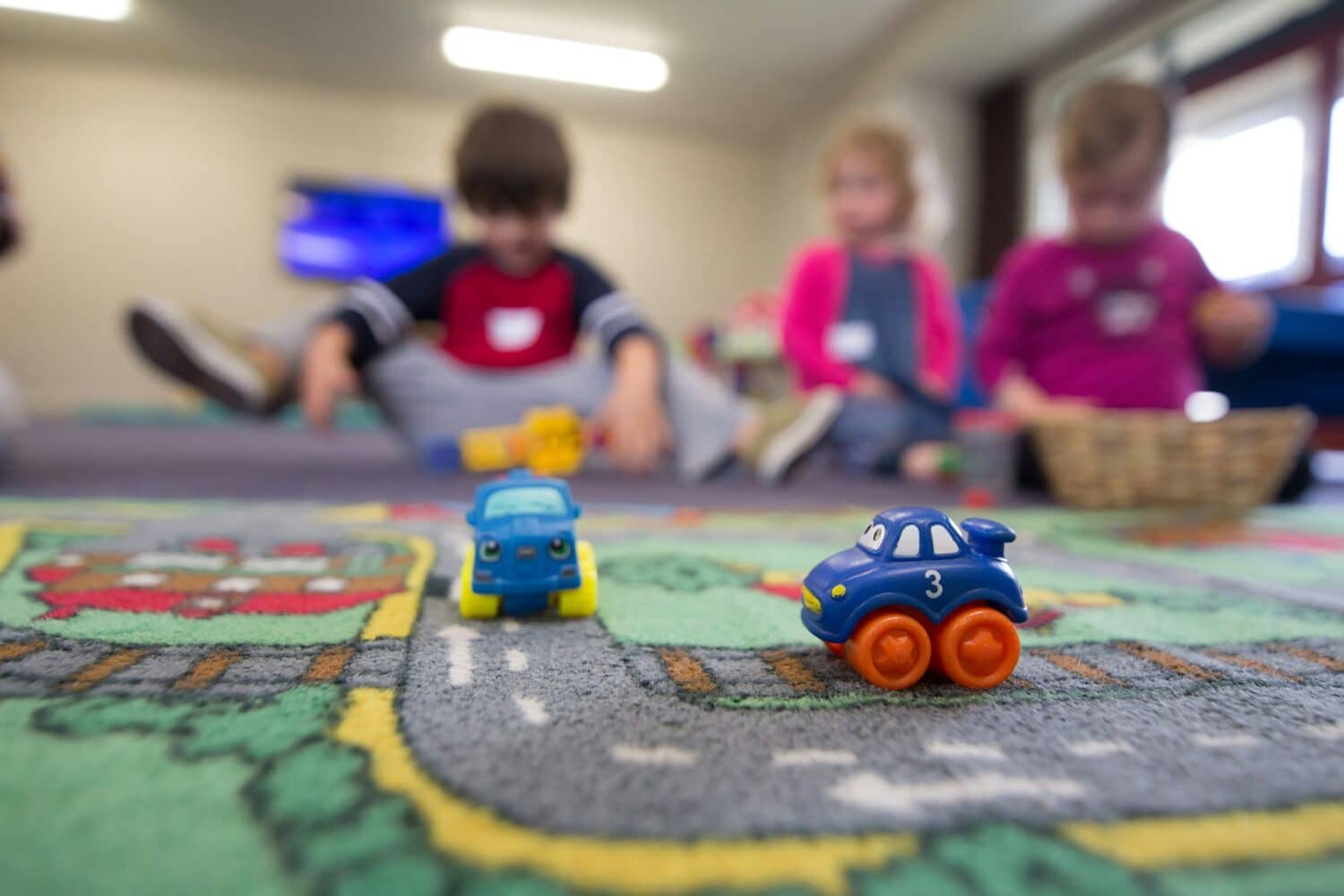
Two practitioners; two approaches to the same routine task. In one room, an 18-month-old’s nappy change becomes a rich learning experience: “What number nappy shall we choose? Look at these pictures and shapes on the packet! Have you done a wee or a poo? Does this wipe feel wet and cold? I’m putting on my apron and gloves – can you help? We need nappy cream – it might feel a bit cold, tell me if it hurts.” Every interaction builds vocabulary, mathematical concepts, scientific understanding, and emotional connection. Down the corridor, the same moment sounds like: “Nappy time… all done.” The child’s learning opportunity vanishes.
This contrast, playing out thousands of times daily in settings across the country, perfectly encapsulates why I feel excitement and concern in equal measure as the government rolls out 30 hours of free childcare for children between nine months and two years old. Working as an early-years educator in the private sector, I have witnessed first-hand the chasm between what these youngest children need and what they are receiving. The expansion represents not just a significant investment in working families, but a transformative opportunity that we’re in danger of squandering if it is not monitored adequately.
The children in our care deserve so much more than what many settings can currently offer them. Consider the typical scenario of a 15-month-old from a working-class family, desperately needing quality provision, but spending her days in a setting where staff turnover is so high that she rarely forms meaningful attachments with caregivers. Or the two-year-old already showing signs of developmental delays that quality early intervention could address, but whose key worker has no training in early childhood development beyond a basic childcare qualification.
The research I encounter tells a different story from the reality I observe. International evidence consistently shows that children exposed to quality early years provision receive better health, nutrition, care and protection, leading to improved development and learning outcomes that last a lifetime. Yet in many private settings—which cater to the highest numbers of this age group—we face a stark reality: staff are often neither suitably qualified nor adequately paid, resulting in provision that offers care but frequently misses the crucial educational component.
This is not about blame – it’s about systems. I work alongside caring, dedicated individuals who genuinely want the best for children. But when practitioners earn barely above minimum wage, when they have no training in child development theory, when they’re responsible for far too many children at once, and when there’s no time for reflection or planning, how can they possibly deliver the rich, responsive interactions that research shows are crucial during these formative years?
I have seen what happens when we get it wrong. The existing programme for two-year-olds provides a telling example. While evidence shows satisfactory-to-good progress has been made overall, too many two-year-olds from disadvantaged families receive little more than basic supervision in settings that lack the expertise to support their complex needs. The government’s own evaluation highlighted gaps in strategic planning, training, qualifications, and specialist support – gaps that practitioners navigate daily.
The stakes couldn’t be higher. Children who experience unstimulating environments during these critical early years face lasting impacts that become apparent as they transition to school. Conversely, remarkable transformations occur when children encounter skilled practitioners who understand their developmental needs and can create meaningful learning experiences.
When I attended a recent Fabian Society panel, I was struck by how policy discussions often happen in abstract terms – ‘outcomes,’ ‘interventions,’ ‘provision.’ But behind every statistic is a real child: the one whose teenage mother works two jobs and relies on childcare for 50 hours a week, or one whose parents speak little English and trust the setting to prepare him for school. These families deserve more than somewhere safe to park their children.
The government’s expansion to younger children represents recognition of what we see daily: the earlier we intervene, the greater the impact. Yet without addressing workforce quality, we risk creating a system where practitioners are expected to deliver educational miracles on shoestring budgets with minimal training. Below I set out what needs to happen, based on what works and what fails in real settings.
We need mandatory qualification requirements which prepare practitioners for this complex work. Currently, someone can be responsible for a baby’s development with less training than it takes to become a hairdresser. The Early Years Professional Status was a step forward, but implementation has been patchy and many settings simply can’t afford to employ graduate-level staff.
We must address the pay crisis that sees talented practitioners leave for retail jobs that pay more per hour. When practitioners calculate their true hourly rates – factoring in unpaid planning time and weekend training – many discover they’re earning less than they would in supermarkets.
We need inspection processes that look beyond safety compliance to assess genuine educational quality. Too often, preparation for Ofsted visits focuses more on having the right paperwork than on whether children are actually learning and thriving.
Most importantly, we need ongoing professional development. The children we work with change and grow daily; practice should evolve with them. Yet finding time and funding for meaningful training whilst working full-time in early years is nearly impossible.
The international evidence offers hope: countries that invest in highly qualified early years workforces see remarkable returns. But without fundamental change, September’s expansion will simply create more settings that are well-intentioned but ultimately failing these children when they need us most.
The children starting in September’s expanded provision deserve practitioners who understand that an 18-month-old’s ‘misbehaviour’ during circle time isn’t defiance but developmental appropriateness, who can create environments that nurture curiosity rather than compliance, and who are valued and supported to do this crucial work well.
This is our moment. The children we care for today will be the adults shaping our society in thirty years. Let’s give them – and their practitioners – what they deserve.
Image credit: Bethbachurch via unsplash